Pages

Friday, June 12, 2026

Security That Prioritizes Community


Are you a Portland business that has supportive ties to the neighborhood? What if I were to tell you that you can protect your assets while offering a service to the public at the same time? Well, look no further. Echelon Security Inc. is the partner you are looking for. 


Our houseless population is very much part of our society, and everyone in it deserves a humble and respectful interaction. Echelon does just that; they have a major relationship to the vulnerable individuals around in Portland. They get to know them by name, and for a good reason. 


Echelon delivers an unparalleled experience in preparation for the necessary duties, offering an understanding and reasonable strategy for our local area, and making respectful de-escalation practice a standard. Echelon brings back humanity to compassionate methods for those on the street, simply surviving. They employ a boots-on-the-ground tactic, establishing relationships and helping those struggling transition to programs that address their requirements: food, clothing, shelter, resources, assistance programs, and any other aspect they require help with. They facilitate connections to support systems that will help them obtain what is necessary, all the way up to getting back into housing and the workforce to repair their lives. 


They go above and beyond the standard expectation of safety services, and one step further, they rewrite the book on what it means to ensure protection for their fellow citizens. Echelon proudly displays how it is not just a win for the clients, but the public, the security firm, and anyone they interact with. For them, the job isn't done until their neighbors are served. If you need to entrust a protective service company that will provide an unparalleled experience and community standards that lift people up, click here for more information  


WALK WITH A PORTLAND SECURITY GUARD: DOWNTOWN POV

They’ve Got the Power!


In a houseless community, one of the biggest and most prominent concerns is not what you may think. Imagine not only hitting a point where you are unable to financially hold yourself, but also being unable to communicate to anyone: cannot get a hold of loved ones, cannot receive phone calls, texts, or emails on work opportunities, assistance programs, or medical evaluations. This is the new concern with our generation in a technology boom, everything going digital, and no means to keep a phone simply charged for such avenues that can potentially turn your life around.


This is the reality surrounding most of the houseless community. Stuck in an ocean without a life preserver, in today’s day and age, digital communication is of utmost importance. So what can we do to offset this growing concern? Luckily, there are a couple of resources that will help with this and our community, while we wait for more permanent solutions.


Meet the Power Bank Project. They can accept donations and help the Portland Metro area stay connected during difficult times. They take donations to purchase power banks that then get distributed to the area. The power banks they supply are specific to iPhone or Android models, as they have a fixed cable attached to them.

Secondly, enter Pear Mentor. Pear Mentor is a location on 6th Avenue in Portland, Oregon. They take a large variety of things for those needing assistance, such as clothing, gift cards, toiletries, and in the large list, are also power banks to stay connected. This place will take donations in the physical form, and they have an approved list of items to donate that is a bit more exhaustive.

Looking to help your community? Below are the links for the mentioned groups.


For information on the Power Bank Project, click here. 

For information on Pear Mentor, click here.


Tuesday, June 9, 2026

When You Don't Have an ID, You Don't Exist


Most of us carry an ID every day without really thinking about it. It is just something in our wallet that we rarely question. But for people experiencing homelessness, losing an ID can create serious problems that most of us never have to deal with. 

A photo ID is needed for many basic things in life. It is required to apply for jobs, open a back account, get housing, accessing healthcare and support services, and even using some food pantries. In some cases, it is also needed to buy certain over-the-counter medicines when some is sick and just trying to take care of their health. Without an ID, even basic needs and opportunities become harder to access. For example, someone might finally get a job interview, but can not finish the hiring process because they don't have identification. 

The problem is that people experiencing homelessness are more likely to lose their ID. When someone is moving around often, carrying all their belongings, or dealing with unsafe situations, important documents can easily get lost, stolen, or damaged. Even if they try to replace it, it is not easy. It can cost money, take time, and require other documents they may not have like SSN, address, etc. This makes it hard to start over.

Another issue is that many systems assume everyone already has an ID and stable housing.When someone doesn't, it can feel like they are being left out or ignored by the system just because they are HOMELESS. It is not just a card, it is something that affects access to opportunities and basic support. 

The next time you use your ID, think about how much it allows you to do without you even noticing. For someone experiencing homelessness, not having one can mean missing out on work, housing, food, healthcare, and even simple things like medicine. Something so small can have a big impact on someone's life.

Resources that can be helpful: the barriers people face when getting identification.


Monday, June 8, 2026

The Simplicity of a Free Ride


Getting from point A to point B is made simply by one thing. The fact that we all have a reliable mode of transportation. I know I would be lost without my car; how does a bus schedule even work, where do we even pay? I don’t even know where the closest bus stop to my house is. We are all much closer to being without a car than we think. Either we forget the car payment and get it repoed, or we get in an accident or need to perform an expensive repair. Not only does not having a car cut into our social lives but it makes it harder for us to go to work, doctors’ appointments, and just important things we have to do in a day. Losing the ability to get around in a timely manner is tuff.

                One of the first questions a job asks is, “do you have a reliable form of transportation”. Relying on someone else to get you around is never reliable, you can miss the bus, or it could be late, there might be a surcharge on the ride share apps making it unreasonable to book a ride. What I am proposing is to have companies or some sort of public funding for people who make minimum wage or less to have a free bus fare or ride share plan in play. I know cities already have a type of discounted faire on buses but sometimes it takes people hours just to take a bus from point A to point B. That is where the ride share comes in. companies should budget for a van to pick up all their carless employees to make sure they get to their shift at a timely manner.

                We have made it almost impossible to get around these cities without a car. With freeways, and unkept sidewalks getting in the way from walking or biking. This has made having a car less of a luxury and more of a necessity. There should be some kind of car insurance discount, and maintenance reimbursement for people who are under a certain tax bracket. A reliable form of transportation is the lifeline to a successful career and a steady flow of income. I have attached 2 websites that may help someone with their car issues.


https://freecharitycars.org/

https://www.portland.gov/transportation/wallet/access-all

Interior of empty bus

Saturday, June 6, 2026

A Dead Phone Can Change Your Entire Day


Most of us don’t think twice about plugging in our phones before bed. But if you don’t have a stable place to live, keeping a phone charged can become a daily challenge.

When people talk about homelessness, conversations often focus on housing, food, or healthcare. Those things absolutely matter but one issue that gets overlooked is access to something as simple as a charged phone. Today, phones are how we apply for jobs, hear back from employers, check email, access resources, navigate transportation, and stay connected to family and friends. When your phone dies, all of that can disappear in an instant.

While working on our capstone project, I started thinking about how many opportunities can be missed because of a dead battery. A job interview call goes unanswered. An appointment reminder never gets seen. A housing contact can’t get through. These may seem like small inconveniences to most people, but they can have a real impact on someone’s ability to move forward.

What struck me most is how easy this problem is to overlook. Most of us carry portable chargers, have outlets in our homes, or can charge our phones in our cars. For someone experiencing homelessness, finding a safe and reliable place to charge a phone isn’t always guaranteed. Libraries, shelters, and community spaces help, but access can be limited depending on the time of day or available resources.

It’s easy to assume that a phone is a luxury, but for many people it’s one of the most important tools they have. Staying connected can mean staying employed, accessing services, or simply maintaining relationships with people who care about you.

The next time you plug in your phone without thinking about it, consider what it would be like if you couldn’t. Small barriers can create much bigger challenges than we realize. If we’re serious about helping people access opportunities and resources, we should pay attention to the everyday obstacles that stand in the way.

Want to learn more about homelessness and technology access? Click here:
https://www.nationalhomeless.org

Friday, June 5, 2026

Losing Your Smile


It’s easy to take teeth for granted. Every day we chomp through 3 or more meals, consisting of food stuff of various consistency, without ever thinking about if we’re able to. Even those of us who don’t go to the dentist regularly probably wouldn’t hesitate to bite into an apple, a tough piece of jerky, or drink a sugary, carbonated beverage, secure in the knowledge that any problems can be fixed with a quick (albeit potentially costly) trip to the dentist. But what if you didn’t have that fallback? What if the teeth you have now are all you’re going to be able to use for the foreseeable future. And what if something as simple as brushing your teeth was beyond your reach to regularly perform? You might begin to think more carefully about the food you consumed, the things you choose to chew on… and of course you can only do so much.


A significantly high percentage of the unhoused suffer chronic dental problems, exacerbated by a lack of easily available dental care. In a survey, it was found that more than 75% of the surveyed unhoused individuals were suffering from some kind of dental issue, and more than 25% had attempted at some point to remove their own teeth rather than seek medical treatment. That sounds dramatic, but anyone who has experienced chronic tooth pain will tell you it’s not. Anyone waiting on a root canal or filling will tell you of the hell that is waiting for your appointment, but for many unhoused there is no waiting: it is simply a pain they will have to carry with them. When you visualize chronic tooth pain stretching from days to weeks to months, suddenly taking dental matters into your own hands doesn’t seem so sensational of a concept. 


On the sadder side of things, nearly 90% of the survey’s participants admitted to feeling self-conscious about their teeth. Imagine having your smile stolen from you, feeling like you have to keep yourself tight lipped at all times, lest someone see what has happened to the inside of your mouth. It sounds hallmark, but there really is something to be said about a dentist’s ability to return someone’s smile to them. 


When we talk about what medical services should be provided to the unhoused, dental care is often one of the less discussed fields. We use our teeth for so many little things throughout the day, restoring their dependability is as important as any other service the unhoused should have access to. So next time you bite into a piece of food without thinking, take a second to think about those that don’t have that luxury


MORE


More information on this subject can be found at the National Library of Medicine


Medical Teams International is working to Bring Medical Care to the Disadvantaged


NHC offers Affordable Dental Care for those in need


Rapid Rise in Homeless Latinos


According to UnidosUS, there has been a rapid rise in homeless Latinos, with a reported 114% increase between 2023 and 2025.

But what does this mean?
Well, for many Latinos, there has been avoidance of traditional shelters due to fear, stigma, and a preference for staying with extended family.
So, what is Portland doing to support the Latino community?
One really great program that has been taking steps to support the community is the Latino Network, a Latine-led education organization. Their focus is “grounded in culturally specific practices and services that lift up youth and families to reach their full potential.”
Latino Network was founded in 1996 by community leaders who saw the gap in adequate resources that meet the needs of the growing Latino community.
That being said, they also have a mobile housing team (MHT), which is a housing placement program for families who have youth under the age of 18. The program is funded through the Joint Office of Homeless Services (JOHS).
For that program, eligible clients must be unhoused, reside in Multnomah County, and have a referral through a JOHS Coordinated Access System following an assessment through 211.
This is an important program, especially because of the effects it has on the whole family unit, including youth.
Like many, Latinos are also being affected by the cost of living, lack of affordable family-sized units, and fear of undocumented status, putting them at great risk when using services. 

But with the rapid increase in homeless Latinos continuing, it is important to recognize what we as a community of this city can do to help support.

For Latino Network resources or learning about their organization: https://www.latnet.org/

Along with that organization, there is also El Programa Hispano Catolico https://elprograma.org/. They support the Latine communities by providing services that span economic sustainability, community wellness, educational equity, and domestic violence intervention through their UNICA program.

A statewide advocacy organization based in Portland that shapes health policy, drives preventative outreach, and fights for optimal health and systemic wellness outcomes for Latinos. https://orlhc.org/

Operates extensively across the Southwest and beyond to address all housing needs, ranging from emergency housing for those experiencing homelessness to long-term homeownership support. https://cplc.org/

https://www.latnet.org/

Thursday, June 4, 2026

The Weight of Survival: Why Safe Storage is the Missing Key to Stability


Homelessness takes a huge toll beyond just the physical weight. Think about those overstuffed backpacks and giant plastic bins you see in Portland. To lots of folks on the streets, these containers aren't just random junk piles, but their entire lives. It is their last link to safety. Inside they store medicines, warm clothes, cherished photos, and IDs. 

People often see these possessions as bothersome eyesores. For the homeless though, lugging around this stuff is more than annoying, it's mentally grueling. They move from place to place with all their worldly belongings clutched tightly. Which leaves them stressed out already, and dragging heavy bags certainly doesn't help. Plus, there's the fear of leaving things unattended, since that could mean having vital items taken away by sweeps or stolen. So, they need to stay hyper-vigilant, leading to relentless worry and strain.

To the homeless, lugging around every single thing they own is part of the constant struggle. What looks like a mess to someone with a home is often all someone else has to hold onto.

People will often tell the homeless to "just get a job" or "keep their appointments," but they overlook a key issue: managing all of their belongings on you all day is exhausting. Trying to get a professional interview or get onto public transportation when weighed down by heavy baggage causes problems. Carriers face immediate rejection or discrimination.

A lack of secure storage negatively impacts efforts to take advantage of assistance programs. Not having a safe spot to stash your gear essentially blocks access to aid needed to escape homelessness. Yet, Portland only offers limited options to solve this dilemma. Take the Northwest Glisan Street daytime storage; it’s understaffed and over-regulated. Most can't use the service since they don’t meet restrictions on container sizes. Self-formed groups such as the Ground Score Association step in. These peer-led programs supply storage, battery charging stations, offering brief reprieve. 

However, reliance on these community-run initiatives causes constant fights for funding and room. The end result? Countless Portlanders must keep belongings on sidewalks, hindering any chance to stabilize and advance toward stable jobs or housing.

Portland needs to make secure storage a main part of addressing homelessness. The city should start by funding local storage centers, lengthening hours at current spots, and teaming up closely with organizations led by people who’ve been homeless or know the issues well. Safeguarding personal stuff protects a person's dignity, identity, and chances of regaining stability. If Portland really values community and innovation, offering lockers for belongings should be as vital as helping someone rent an apartment. It's a big first step in helping people feel proud and start fresh.

If you are interested in learning more about how peer-led storage initiatives operate or want to support their work, check out the Ground Score Association website HERE.

Wednesday, June 3, 2026

A Roof Over Your Head or Your Best Friend

 A Roof Over Your Head or Your Best Friend?


Imagine losing everything tomorrow—your job, your savings, and the roof over your head. In the middle of that chaos, there is only one thing you can still count on: the dog or cat sitting beside you, offering comfort when the rest of the world seems to have turned away.

Now imagine arriving at a homeless shelter on a freezing Portland night and being told you have a choice: a warm bed for yourself or a safe place for your pet—but not both.

For many people experiencing homelessness, this is not a hypothetical situation. It is a painful reality. Many traditional shelters still do not allow animals, forcing people to choose between safety and the companion that has helped them survive some of the hardest moments of their lives. As a result, some individuals sleep outside in dangerous conditions rather than abandon their pets.

Some may question why a person struggling financially would keep a pet in the first place. However, companion animals are far more than a luxury. For many unhoused individuals, they are a source of emotional support, protection, routine, and unconditional companionship. When someone has lost nearly everything, that bond can become one of the few remaining sources of stability and hope.

A truly compassionate community should not require people to separate from their family members in order to receive help. If Portland wants its shelter system to effectively support people transitioning out of homelessness, it must recognize the important role pets play in their owners' lives and expand access to pet-friendly shelter options.

Why should we care? Because a city that values compassion should never force its most vulnerable residents to choose between saving their lives and keeping the companion who helped them survive.

Read more:https://www.oregonhumane.org/


What Climate Change Looks Like Without a Front Door

 What Climate Change Looks Like Without a Front Door


When a severe heat dome settles over Portland or a winter freeze covers the city in ice, most of us check the weather forecast, adjust the thermostat, and stay indoors. We might complain about the heat or the cold, but our safety is rarely in doubt.

But what if you didn't have a thermostat? What if you didn't even have a door?

For thousands of people experiencing homelessness in Portland, climate change is not a distant issue about rising sea levels or melting glaciers. It is a daily struggle for survival. As extreme weather events become more frequent across the Pacific Northwest, the absence of basic necessities like shade, clean drinking water, and climate-controlled shelter can quickly become life-threatening.

Imagine spending a 103-degree afternoon outside with no place to cool down and no access to cold water. Imagine trying to sleep through a freezing winter night while your blankets are soaked from rain and temperatures continue to drop. These are not rare situations—they are realities faced by many of Portland's unhoused residents every year.

Homelessness has long been viewed as an economic issue, but it is increasingly becoming an environmental justice issue as well. The people most exposed to extreme weather are often those with the fewest resources to protect themselves. As a community, we cannot assume someone else will solve the problem. We share a responsibility to ensure that our most vulnerable neighbors are not left to face dangerous weather conditions alone.

We may not be able to solve climate change overnight, but we can take steps to protect people in our own city today. Why should we care? Because the strength of a community is measured not by how it treats its most comfortable residents, but by how it protects those with the least protection when conditions become the most severe.

Read more:https://www.portland.gov/bps/climate-action/climate-emergency/about-climate-emergency-declaration

Can Money Solve Homelessness?


Let’s pretend, for a moment, that you just found out that you were fired from your job because they found a way to replace you with AI; or that you were diagnosed with an illness that requires very expensive medications or a very expensive surgery; or that your landlord has decided to sell the home you’ve been living in for 10 years to new real estate agency who intend on increasing the cost of rent by $500 a month if you’re interested in staying.


The sad truth is that these are very real circumstances that are becoming more & more common, & so I’m going to ask you a very simple question: What do you think would help you most in this situation: $1,000 a month with no strings attached or an expense free shelter where you’ll share your personal space with 20, 30, or 40 other people in similar or worse circumstances? 


I’m assuming, you’d take the $1,000 a month without question. So, if the solution seems so obvious to you, why haven’t we been approaching this strategy to solve homelessness? 


Let’s run some simple numbers: According to OregonLive, $742 million are spent on addressing homelessness in Portland alone (Thomas, 2025). If all of that money were redirected towards simply providing people experiencing homelessness $1,000 a month for a year, you’d be able to provide direct support to 61,333 individuals. Of those 61,333 individuals, 91% of them are likely to find housing within that year (Mongeau, 2025). That’s 56,268 people out of homelessness. 


When compared to the current method of “solving homelessness,” one has to question: What are we doing? 


I’d argue that because we’ve spent so long viewing homelessness as some moral failing, we’ve lost sight of the underlying empathy needed to resolve this social ailment. 


I invite you to present this way of thinking to everyone you know, because some day, it may be you who needs this change. 


Mongeau, Lillian. “Here’s How Much Was Spent on Homeless Services in the Portland Area Last Year.” Oregonlive, 9 July 2025, www.oregonlive.com/politics/2025/07/heres-how-much-was-spent-on-homeless-services-in-the-portland-area-last-year.html


Thomas, J. (2025, November 19). Oregon pilot program giving cash to homeless youths sees staggering reduction in homelessness. Street Roots. https://www.streetroots.org/news-stories/2025/11/19/oregon-experiments-direct-cash-payments-assist-homeless-youths/ 


The Prison Trap


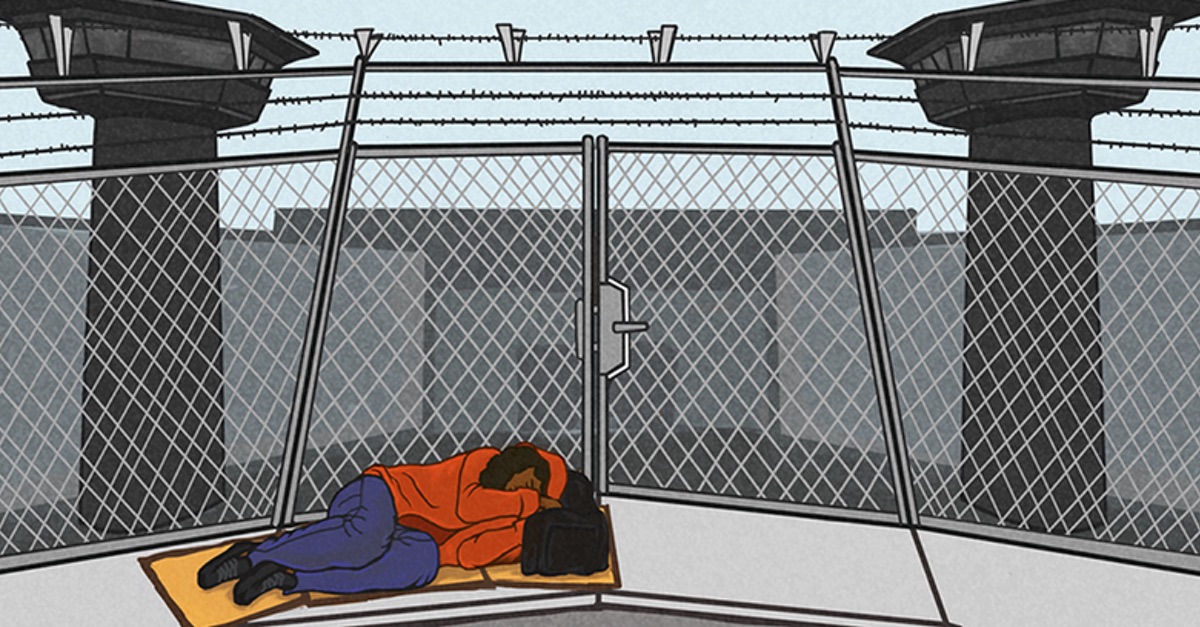
5 in 6 people who were released from prison were arrested again within the first 9 years after being released (Alper, 2018) 15.3% of prisoners had experienced homelessness in the year leading up to their arrest (Greenberg, 2008). Though these issues seem unrelated, there are overlapping contributors to people experiencing houselessness. We are all driven by basic needs that we must fulfill: food, water, & a reliable place to rest safely. When people are put in situations where these needs become more difficult to meet, they will find some way to cope: sex, substances, mental escape. They may also turn towards alternative methods of meeting those needs: harmful romantic/sexual relationships that provide safety, theft, or other forms of crime. 

A new economic landscape is emerging, in which the average person is unable to meaningfully meet their basic needs. This has caused a spike in crimes, such as the warehouse fire attributed to a disgruntled employee that stated, “If you’re not going to pay us enough to f*cking live, at least pay us enough not to do this.” (ABC7 Chicago, 2026) This economic dismay is the same underlying motive behind people committing petty crimes, such as car break-ins or other forms of theft. By removing honest paths towards fulfilling the basic needs of oneself or loved ones, crime will become a growing norm. 


Unfortunately, this results in a feedback loop. The more often you’re incarcerated, the less likely that you’d be housed. With the average American one paycheck away from houselessness, this is a frightening infrastructure that is built on false moral grounds. Why punish people for trying to meet their basic needs? The entire purpose of the government is to assure the mutual benefit to all those participating in that system. 


So, then, what do we do? 


Let’s be honest about our current situation & work together, both within & outside of government systems. Within, let’s elect representatives that have plans to address these real contributors of economic anxiety: AI regulations, food accessibility, employee protection, & fair housing policies. Outside of the system, let’s work together to find ways to address our needs: community gardens, co-op housing options, lending circles, & other forms of communal aid programs. 


ABC7 Chicago. New video appears to show start of Southern California warehouse fire, may reveal motive. (2026, April 9). ABC7 Chicago. https://abc7chicago.com/post/new-video-toilet-paper-being-set-fire-reviewed-part-investigation-southern-california-warehouse/18860399/ 


Alper, Mariel, et al. Special Report 2018 Update on Prisoner Recidivism: A 9-Year Follow-up Period (2005-2014). U.S. Department of Justice, May 2018, bjs.ojp.gov/content/pub/pdf/18upr9yfup0514.pdf.


(IMAGE SOURCE) Couloute , L. (2018, August). Nowhere to Go: Homelessness among formerly incarcerated people. Prison Policy Initiative. https://www.prisonpolicy.org/reports/housing.html 


Greenberg, Greg A., and Robert A. Rosenheck. “Jail Incarceration, Homelessness, and Mental Health: A National Study.” Psychiatric Services, vol. 59, no. 2, Feb. 2008, pp. 170–77, https://doi.org/10.1176/ps.2008.59.2.170


Tuesday, June 2, 2026

It’s Time to Clear Away Spending on Sweeps

The experience of being homeless is not pretty nor dignified. Those who must endure it firsthand are often relegated to out-of-sight, out-of-mind because of how much of a source of discomfort their situation is to others. On the other hand, for those living near homeless encampments, I can imagine how jarring it must be to be confronted daily with the realities of how some people live in order to survive. 


I understand not wanting to have strangers sleep on your sidewalk, or do drugs in front of your children as they walk to school. 


But moving the problem around the corner is not the same as solving it. 


When it feels like nothing is being done, any visible change can seem like a step in the right direction. This is where I believe the impetus for homeless encampment sweeps comes from, a desire to do something, anything that seems to help. But the illusion of progress never helped anyone in the long run.  


Portland spent $72.5 million in 2025 on sweeps and emergency shelter funding. Between 2021 and 2023, Portland spent $200,000 per homeless individual. Yet homelessness continues to rise in Oregon, and the death rate of homeless people in Portland has quadrupled from 2019 to 2023. 


Many people lose what precious stability they have when the sweeps come through. Their belongings are thrown away, and they must move somewhere new despite any connections to community or services they may have previously had access to. One Portland individual named Debby Beaver was 57 when she died a week after a sweep due to her medication being thrown out. The city contractors responsible for the sweep, without admitting any wrongdoing, paid a settlement of $45,000 after her family filed a wrongful death suit. Sisters of the Road and the Welcome Home Coalition, an advocacy group, released a report which found that people experiencing homelessness saw living in shelters “as undesirable as outdoor spaces.” The same report found that housing affordability was the biggest cause of homelessness and the biggest barrier to getting out of it. Pushing people who have nowhere else to go into temporary shelters that feel unsafe as their only option is cruel and unhelpful.  


The punishment of sweeps is not helping anyone.


If there is kind of money to pay for sweeps and shelters, then those resources should be allocated towards a solution that will actually improve all our lives: affordable permanent housing. Everyone deserves a safe and stable home. The way to ensure that for all citizens and residents is to increase access, not shove those who are in a rough way down the road. 


To read more about sweeps and what is actually happening in homeless communities, click the links below. 


Portland’s top leader escalates homeless sweeps amid federal crackdown - Street Roots


Portland said it was investing in homeless people’s safety. Deaths have skyrocketed. - Street Roots


Officials say the 'camping ban' is meant to offer resources to homeless Portlanders. None of them are tracking whether it’s working. - Street Roots