Pages

Showing posts with label homeless. Show all posts

Monday, May 19, 2025

How does the U.K handle homelessness?

   There is a foundational difference in how the U.S and the U.K handle homelessness. In the U.S we define homelessness as a very straightforward: "The state of having no home". The UK however, defines homeless in a variety of ways: 

  • Have no accommodation available to occupy

  • Are at risk of violence or domestic abuse

  • Have accommodation but it is not reasonable for them to continue to occupy it

  • have accommodation but cannot secure entry to it

  • Have no legal right to occupy their accommodation

  • Live in a mobile home or houseboat but have no place to put it or live in it

    These six definitions lead to a much wider variety of U.K citizens that could be legally defined as homeless. So why does the U.K define homelessness in a much broader sense? It could be because there are far more resources available to those deemed legally homeless. For example: If local social workers are satisfied that the person is threatened with homelessness and eligible based off of a homelessness application then these actions will be taking place:

  • Assess the person's housing needs

  • Agree a personalized housing plan 

  • Take reasonable steps to help prevent them from becoming homeless.

I especially like that last bullet point. Action is taken to prevent the threatened individual from becoming homeless. This plan of action is great in theory but how does in work in reality? Look for yourselves 


    In the United Kingdom, approximately 16 out of every 100,000 people experience homelessness, whereas in the United States, that number soars to around 76 per 100,000. This stark contrast raises a critical question: what systemic changes can we implement to better support our homeless population and prevent more individuals from falling through the cracks? One key improvement would be the development of a comprehensive, proactive strategy for social workers and support services to engage with individuals who are at high risk of losing their housing. Early intervention could be the difference between temporary hardship and long-term homelessness. After all, the transition into homelessness isn’t just a logistical nightmare, it’s an overwhelming lifestyle shock, often accompanied by trauma, instability, and the erosion of one's sense of dignity. We must act not just with policy, but with compassion and foresight.


Sources used: 


https://ourworldindata.org/homelessness


https://england.shelter.org.uk/professional_resources/legal/homelessness_applications/homelessness_and_threatened_homelessness/legal_definition_of_homelessness_and_threatened_homelessness


Thursday, March 20, 2025

Hidden Pain – How A Lack Of Dental Care Worsens Living Situations For Homelessness & Unsheltered


Hidden Pain – How A Lack Of Dental Care Worsens Living Situations For Homelessness & Unsheltered


More Than Just A Toothache

When you think of someone experiencing homelessness or living unsheltered, the causes that first come to mind may be; unemployment, substance abuse, mental or physical illness, lack of affordable housing, domestic violence, etc. Though these issues are what can cause or lead to homelessness, the state of your body and mind becomes so damaged it is hard to escape a period of homelessness once one begins. Homelessness affects one's ability to eat, sleep, or interact with normal, everyday people. However, one issue that is underlooked in this is how poor dental health can worsen conditions of homelessness.


The Cycle Of Poor Oral Health

When we apply for a job, a loan, or even are in public settings, our physical appearance means a lot. That goes for the clothes we wear and our physical appearance. When folks are experiencing homelessness, it is very difficult to have a professional or clean appearance. A major issue has to do with the access of oral and dental health. With poor oral health, one's physical appearance may be seen in a negative way. Trying to find employment or finding housing may be difficult to accomplish with poor oral health due to potential threats of foul smelling breath, gum disease, or tooth decay.

Physical appearance matters a lot especially when applying for a job. Without a job to provide a stable income, it makes it extremely difficult to escape being homeless. To expand off of this cycle, it is not just employment that is affected but also one's personal health. Risk of tooth decay and gum disease can lead to oral infections and other diseases that are harder to cover. With a lack of adequate access to healthcare, dental and oral health infections can worsen one's overall health. 


Organizations Providing Solutions

Fortunately, some programs are working to bridge the gap:


Restoring Dignity: How Dental Care Helps Homeless Veterans Build Their Healthy Life


Restoring Dignity: How Dental Care Helps Homeless Veterans Build Their Healthy Life


Unforeseen Health Issues Among Veterans

When we typically think of the struggles that homeless veterans endure returning from combat, we typically think of broader issues such as mental health and unemployment. As these issues are very devastating and disastrous to both one's mental and physical well being, one specific area that is severely under
looked is their access to healthcare. More specifically, is their access to oral and dental health. 

Why Homeless Veterans Struggle With Dental Care

Dental care is not fully covered by the Department of Veterans Affairs (VA) unless a veteran is 100% disabled or was a prisoner of war. Because of these strict requirements, there are still thousands of homeless veterans who have no access to basic oral care or even tools to maintain oral hygiene. Because of this, many suffer from tooth decay, gum disease, and various oral infections. 

With poor oral hygiene from lack of access and affordability, this makes it harder to find a job. Without being able to have a stable income, it makes it even harder for veterans to be able to receive the care that they need. 


Programs Reaching Out

Despite the struggles that veterans face regarding their oral healthcare, we still see that there are other various sources and networks reaching out to help 

  • The VA Homeless Veterans Dental Program provides partial care depending on the health and current diagnoses of a veteran

  • Stand Down Events across the country is a group of volunteers who come together to help veterans be given food, clothing, and health screenings, as well as referrals to housing, employment, substance abuse treatment, and mental health counseling

  • Nonprofit organizations like Homeless Not Toothless is a great source for homeless and unsheltered individuals to have oral care they desperately require


Why This Matters

Despite the major political divide in our country, one thing should be very clear; we need to treat our veterans when they return home. As these men and women help protect us from potential threats around the world, they deserve to be treated with the proper care they deserve upon returning home. Similar to post World War II, we should strive as a country to help our veterans return to their feet by offering more access to services including oral and dental healthcare. Dental care should not be a privilege, it should be a right to every American and especially those who have sacrificed their lives for our country. 


Resources To Reach Out 


Homeless Not Toothless 

https://www.homelessnottoothless.org/


Stand Down Events

 https://www.va.gov/homeless/events.asp


Bridging the Gap: A Former Public Health Worker on Healthcare and Homelessness

An Interview with Jean Dentinger

Access to healthcare is a fundamental right, yet for people experiencing homelessness, it remains one of the most significant challenges they face. In this interview, we sit down with Jean Dentinger, a former public health outreach professional, to discuss the real barriers unhoused individuals encounter when seeking medical care. From systemic hurdles to the personal struggles of building trust, Jean shares invaluable insights on what’s needed to bridge the gap between healthcare services and the people who need them most.

The full interview can be accessed and viewed with this link:  

https://youtu.be/Hce5Wi1ZO04


Understanding these challenges is just the first step. Providing healthcare to unhoused individuals isn't just about offering services, it’s about fostering trust, reducing stigma, and creating sustainable solutions. If you want to learn more or support organizations working on this issue, check out the resources listed at the end of this video. Together, we can advocate for a healthcare system that truly serves everyone.


Resources: 


https://www.ojp.gov/ncjrs/virtual-library/abstracts/project-respond-effective-response-homeless-mentally-ill-police-and#:~:text=Project%20Respond%20is%20a%20crisis,urban%20core%20of%20Portland%2C%20Oregon.


https://www.samhsa.gov/communities/homelessness-programs-resources/


https://www.hhs.gov/programs/social-services/homelessness/resources/


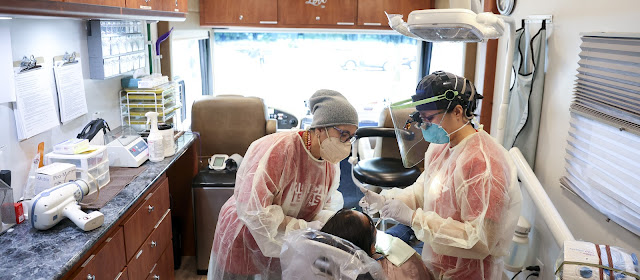
https://healthcenter.multco.us/current-patients/find-more-support/mobile-clinic


https://outsidein.org/health-services/mobile/


https://centralcityconcern.org/health-care-location/mobile-health/


Friday, March 14, 2025

Preventative Approaches to Dental Care Before an Emergency Room Visit


        To many people, toothaches may seem like a minor inconvenience and could be a quick fix at the dental office. Still, to others who experience homelessness and are unable to receive the services to prevent them, toothaches can be a reason to visit an emergency room, as they are unable to make that easy and accessible trip to the dentist. Those who are homeless or who do not have health insurance are often left to endure the oral pains and ignore those issues until the matter worsens and calls for an emergency room visit. 
        Visits to emergency rooms are only temporary solutions to the growing problems of oral pains due to poor dental care. This can become a cycle for the homeless community in which they find themselves repeatedly visiting emergency rooms to treat all oral health issues. Through preventative measures, the homeless community would have the opportunity to treat any dental health issues promptly, rather than letting the oral matter worsen through time. 
        Rafael Figueiredo et al.. conducted a study on using the emergency department due to oral issues. The study examined 1,189 people who were homeless and studied how often they visited the emergency department for dental issues. The results found:
        80% of homeless individuals had visited the emergency room because of odontogenic infections,                while 46% of those individuals had made that visit more than once. This study was conducted from            2005-2009 in the Ontario, Canada area. 
        
        This is just one example of visits that are seen within communities of people who are homeless visiting the emergency department. The study could be used as an example for different regions as these visits by people who are homeless could be seen as a widespread and systemic issue, where the lack of preventative measures has caused this issue. Other reliefs that can be substituted for emergency room visits could be an investment in preventative dental care, which could reduce the number of visits individuals make for something that can be prevented. 
Some accessible and affordable dental care options for individuals who are homeless could be:

        Mobile Dental Clinics:
  • https://www.medicalteams.org/emergency-dental-clinics/
  • https://healthcenter.multco.us/current-patients/find-more-support/mobile-clinic#657-what-is-a-mobile-clinic
        Community Dental Programs: 
  • https://www.bridgesclinic.org/faqs-1
  • https://www.greaterportlandhealth.org/services/dental
        Through advocacy and accessible information regarding this matter, more people will be able to access the care they need. As a community, we need to focus on the fundamental importance of dental care for people who have minimal to no access to it. Spreading awareness and knowledge can help others in need of these services. 


Sources: 

Figueiredo, R., Dempster, L., Quiñonez, C., & Hwang, S. W. (2016). Emergency department use for dental problems among homeless individuals: A population-based Cohort Study. Journal of health care for the poor and underserved. https://pmc.ncbi.nlm.nih.gov/articles/PMC4889437/


Saturday, March 8, 2025

Dental Hygiene Products are key to great Dental Health

    Dental hygiene is very important for our health and for the houseless community. One way we can help them achieve proper dental hygiene practices would be having access to dental hygiene supplies. There are a few ways to help those less fortunate to have access to these supplies mainly through programs and groups like the Blanchet House, and hygiene for all. The only issue is the Blanchet house doesn’t list dental products as a need on their website.

    Travel Size dental product packs are low cost and compact easy for a person to store in any scenario. There are products readily available on Amazon for less than ten dollars. This low cost and small size make it easy for you to donate to places like the Blanchet House or h4a. 


    It is important to partner with them to see what dental hygiene products they need or want. The Unhoused community live in conditions that may make dental hygiene a low priority. Especially as they live through the winter. Our goal is to help them gain access to more dental products that could help improve their overall health.  


    To increase the smiles across Portland it is very important for everyone to be aware of the issue and to donate what they can in order to improve the health of the unhoused. Here are some ways you can make a difference in the community by contacting these different sources.

·         Blanchet House at 310 NW Glisan St

Phone Number :503-241-4340

https://blanchethouse.org/get-involved

·         Hygiene4all At 824 SE MLK Jr Blvd

Phone Number: (971) 236-2524

https://www.h4apdx.org/


Thursday, March 6, 2025

 Essential Nonprofit Dental Services


Why Are These Clinics Essential:

People who experience homelessness often face daily struggles to find food or a place to sleep, making it extremely difficult to navigate the healthcare system and access quality care. "Without adequate housing, individuals are at greater risk of poor health outcomes, including complications of chronic illness and substance use disorders and mental, and behavioral health issues such as post-traumatic stress disorder. Underrepresented populations in Multnomah County experience the deleterious consequences of homelessness at a disproportionate rate." Providing these health clinics helps to save the lives of those experiencing homelessness and hopefully helps to uplift them and help them transition out of homelessness. 


Local Programs:

A local Portland program called Bridges Collaborative Care Clinic is a nonprofit student-run homeless clinic offering a multitude of healthcare services which somewhat recently expanded to include dental health. This clinic's volunteers consist of local students from Oregon Health & Science University, Oregon State University, and Portland State University."Student volunteers identified dental services as a top need for Portland’s homeless community early on, while conducting a needs assessment prior to opening." Since then the Bridges Collaborative Care Clinic has been able to open multiple locations. "The medical clinic is located in the lobby of The Clark Center Annex in inner Southeast Portland, just across from The Clark Center - a transitional housing shelter for clients of Bridges partner Transition Projects, which helps people transition out of homelessness." These clinics are essential to the homeless community they serve and provide real-world hands-on dentistry experience for the students running the clinic. Supporting local programs like these helps not only the houseless community who benefit from their services but additionally helps to train future healthcare workers and instill the importance of community outreach on behalf of the healthcare services.


Find Upcoming Clinics: 


How can you donate?


How can you Volunteer?

Wednesday, March 5, 2025

Oregon Health Plan: How To Access It And Is It Going Away?


 Background


The Oregon Health Plan is a medical assistance program that offers health care for low-income persons who meet the required qualifications. Among the things covered by this program are doctor visits, hospital care, mental health services, and dental care. They offer Oregon Health Plan Plus for low-income people who meet the eligibility requirements and Oregon Health Plan Bridge for those just above the standard plus limit. It is available to anyone of any age or immigration status. 


Dental Health Coverage


The Oregon Health Plan offers a variety of options for dental care. All members receive diagnostic, preventative, restorative, and specialist care. They offer check-ups, x-rays, cleanings, and fluoride varnish for diagnostic and preventative care. Restorative care includes fillings, extractions (having a tooth pulled), stainless steel crowns on back teeth, full dentures every 10 years, and partial dentures every 5 years. Finally, specialist care offers emergency or urgent care. However, emergency care only covers what is considered a true emergency. Examples of these would include losing a tooth, suffering from severe pain that won’t go away, or having a serious infection. If it is not a true emergency, then you may be asked to cover the bill. 


Veterans and members of the COFA (Compacts of Free Association) are entitled to additional benefits. In addition to the standard benefits, they can get free dental appointment rides. In some cases, certain drugs prescribed by the dentist, like antibiotics and pain relief medications, may also be covered.  


How to Access The Oregon Health Plan


Applications for the Oregon Health Plan can be submitted and accepted at any time of the year. However, it may be important to check eligibility before applying. The Oregon Health Authority offers a tool to help check for eligibility, which can be accessed here. When one is ready to apply, they can do so online at ONE.Oregon.gov, by phone at 1-800-699-9075, in person at a local Oregon Department of Human Services (ODHS) office, with an Oregon Health Plan-certified community partner, or by downloading and filling out an application from the OHA website here. 


Availability 


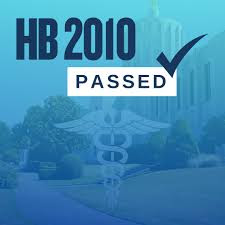
Medicaid has been under threat recently due to President Trump’s focus on cutting down government spending. Fortunately, the Oregon House has passed a bill (HB 2010) that would extend funding for the Oregon Health Plan through 2032. At the time of this posting, the bill is awaiting approval from the Senate. If approved, it will then be sent to Oregon Governor Tina Kotek for her to sign. It is important to note that despite the lack of protection, there are no plans to cut the Oregon Health Plan. 


Conclusion 


The Oregon Health Plan offers dental coverage for low-income Oregonians who meet the proper requirements. This extends to any person, regardless of immigration status. People can apply online, over the phone, or in person at any time of year. While there are talks of cutting Medicaid, there are no concrete plans to cancel the Oregon Health Plan. Likewise, there is a bill pending approval in the Senate to protect the Oregon Health Plan through 2032. For more information, see this article’s sources. 


“Health Coverage in Oregon.” OregonHealthCare.gov : Health coverage in Oregon : State of Oregon. Accessed March 2, 2025. https://healthcare.oregon.gov/pages/types-of-coverage.aspx. 

“OHP-Standard-to-Plus-Fact-Sheet.” Oregon Health Authority, October 24, 2013. 

“Oregon Health Insurance Plans: Find the Best Coverage for Your Needs.” healthinsurance.org, February 13, 2025. https://www.healthinsurance.org/health-insurance/oregon/ . 

Plante, Aimee. “House Passes Bill to Save Oregon Health Plan IF Congress Kills Medicaid Funding.” Koin 6, February 27, 2025. https://www.koin.com/news/politics/house-bill-oregon-health-plan-medicaid-funding-02272025.  

How You Can Help- Volunteer Opportunities in Your Community


Why It Matters

Dental care is often one of the most overlooked aspects of health for individuals experiencing homelessness. Without access to regular check-ups or necessary treatments, oral health issues can worsen, leading to significant physical and emotional challenges. However, there are numerous ways you can make a direct impact in your community by volunteering with outreach programs dedicated to providing dental care to the homeless. Whether you're a dentist, a dental student, or simply someone willing to lend a hand, your time and effort can help improve lives, offering people the chance to regain their confidence and access the care they desperately need. In this post, we’ll explore some of the local and national volunteer opportunities that make dental health services accessible to everyone, regardless of their circumstances.


Resources and Ways to Help

  •    Dental Professionals- Gateway Grace Dental Clinic

“Our goal is to provide comprehensive dental care to adults making up to 300% of the federal poverty level.”

https://www.pacsonline.org/dental#:~:text=Volunteering%20Opportunities%20at%20the%20Dental%20Clinic&text=please%20contact%20Carol%20James%2C%20dental,as%20a%20volunteer%20dental%20professional!


  •   Dental Students- Budd Clark Commons 

BCC is a student-led free clinic that provides dental services to vulnerable populations in the Portland-metro area. 

https://ohsufoundation.org/stories/bridges-collaborative-care-clinic/#:~:text=BCCC%20is%20a%20student%2Dled,Rao%2C%20D.D.S.%2C%20GPR%20'23


  • Other Volunteer Opportunities- Oregon Dental Association

“Volunteers provide the ODA with essential resources needed to help us fulfill our mission and reach our goals. Volunteering for the ODA is about giving, contributing, and helping the profession to make a better community.”


https://www.oregondental.org/member-center/volunteer

Oral Care and Pregnant Women Experiencing Homelessness

Pregnant Women and Oral Health


Adequate oral care is scarce for the homeless population but there are individuals within this community that experience a higher degree of vulnerability, like pregnant women. Pregnant women experience oral health complications during their pregnancy like gingivitis or tooth decay. The hormones of pregnant women fluctuate heavily during their pregnancy; They experience morning sickness/vomiting and this makes their gums and teeth more sensitive and susceptible to disease and decay (Head Start, 2025). As a healthy baseline, women who are pregnant are recommended to brush their twice a day, floss regularly, consume a healthy diet, and receive oral care (Head Start, 2025).


Resources for Pregnant Women Experiencing Homelessness

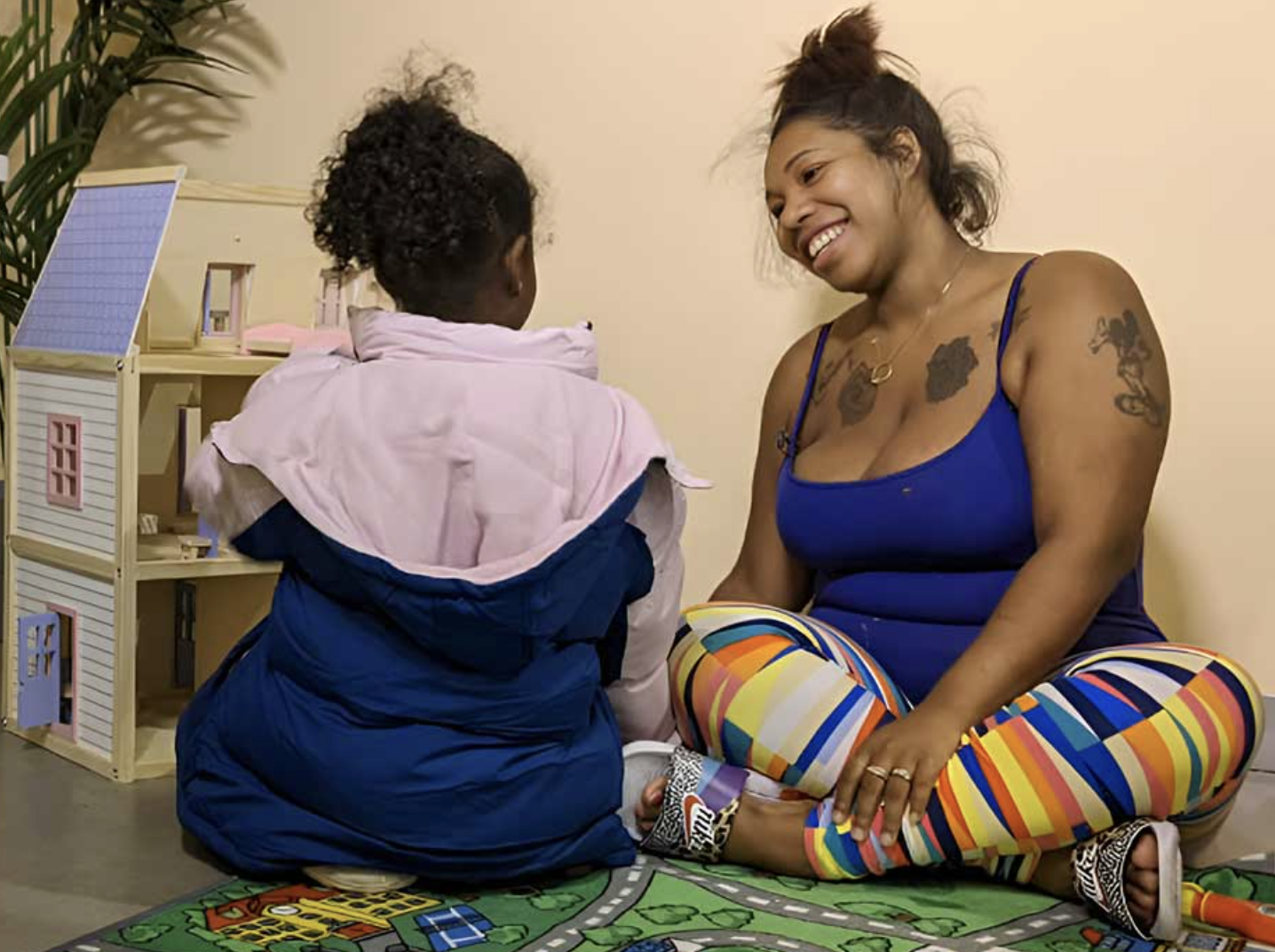
Women are generally a vulnerable population while experiencing homelessness, but when they are pregnant, they must urgently receive medical and oral care for the benefit of their child and themselves. A place where pregnant homeless women can find an adequate amount of shelter, food, health, and oral care is Maternity homes. The Portland-based Hope Squared Foundation is a place where all pregnant women in the Portland area can find shelter, overall health care, and maternity support. Maternity homes are a life-giving resource for homeless pregnant women, especially if they seek stability after giving birth. A specific maternity home that pregnant women experiencing homelessness in Portland can visit or stay at is Saving Grace Maternity Home. Rose Haven is another center located in Portland that specializes in supporting women and children experiencing poverty and homelessness.


How You Can Make an Impact

Image From: https://rosehaven.org/

Overall, maternity homes and dental care services for pregnant women experiencing homelessness are key resources that improve vulnerable situations. Greater Health Portland is an organization that provides oral care for impoverished and homeless populations like pregnant homeless women. In the case of homeless pregnant women, receiving shelter and prenatal care are most urgent, and oral care is included within these necessities. The Portland community should proudly support organizations and foundations like Greater Health Portland, Hope Squared, Saving Grace Maternity Home, and Rose Haven if they want to support pregnant women experiencing homelessness and in need of dental care.


References
Greater Health Portland. (2025). https://www.greaterportlandhealth.org/
Head Start. (2025, January 21). Promoting oral health services for pregnant women. https://headstart.gov/oral-health/brush-oral-health/promoting-oral-health-services-pregnant-women
Hope Squared Foundation. (n.d.) https://www.hopesquaredfoundation.org/
Rose Haven. (n.d.).  https://rosehaven.org/
Saving Grace Maternity Home. (n.d.).  https://savinggracematernityhome.org/