Pages

Showing posts with label global warming. Show all posts

Tuesday, April 19, 2016

"Brown is the new green"

Want to know if someone is sustainably taking care of their lawn?

 We will find out soon enough, and we won't even have to spy on our neighbors to see what they are putting on their lawn. Once the hot and dry weather gets here we will see one of two things change. Our water bill is going to get much higher or our lawn is going to get brown. This is where the phrase "brown is the new green " comes from. For the last couple of summers in the pacific northwest we have had record heat and most of the area was in some sort of drought. Not to mention that NASA declared that 2014 was the hottest year on record for Earth. Until after 2015 when it was even hotter. Who knows what to expect for 2016. As I sit here right now we are setting another record for the warmest it has ever been on this day in April, and it was the same case for yesterday. It has been recorded that the Earth is getting hotter, which in my head, means that water is going to get more sparse and we are going to continue to have to think of more sustainable ways to live. So, why not start by just letting our lawn turn brown for a couple of months. Seems like a pretty easy task to me.

I for one will not be watering my lawn again this summer. Yes, it gets brown and doesn't look to appealing. However, believe it or not, it turns green again! Who would have thought? This VERY interesting and helpful WEBSITE can teach you ways to have a healthy lawn without damaging the environment. Enjoy.

Friday, August 7, 2015

Fracking and Climate Change

Hydraulic fracturing, commonly known as ‘fracking’, is a drilling technique used to obtain oil and natural gas from deep in the ground. Patented in 1949 by Halliburton, the practice has expanded and advanced through today, with many companies taking part in this technique. The companies drill deep holes into the earth and cases it with steel and cement, then they pump a mixture of sand, water and chemicals into the well at high pressures, fracturing the rock, allowing natural gasses to flow out of the rock, through the tunnel to the surface where it is treated and removed. Generally, the wells ‘dry up’ within a few years, then they are plugged and the companies move on to other areas. Since 9/11 and conflicts with many countries with high rates of oil production and export, fracking has seen a boom in the U.S., in the last five years alone the U.S. has a daily increase of 3.7 million barrels of oil, dropping the import of oil by 44%. In 2012, the U.S. became the #1 producer of natural gas, removing Russia from the top spot. Obviously, this has been good for the economy of the U.S. but has it been good for our environment?


Environmental Impact:

With fracking, the use of natural gases have become much more abundant than the use of oil and coal. Natural gases output carbon dioxide at less than half the rate of oil and coal, which should be a good thing for the atmosphere. But, what studies are finding is that because the natural gases are more abundant suddenly (because of the prevalence of fracking), and cheaper than coal and oil imported from the Middle East, the rates of consumption have gone up, thus increasing the lowered rates of carbon output. Another problem with fracking is the release of natural gases into the atmosphere while drilling. Methane is the gas that could have the most alarming consequences, being 72 times more potent than carbon dioxide over a 20-year period, trapping heat in the atmosphere. Besides affecting the atmosphere, fracking has had negative effects on our nation’s human water supply, variously from leaks into communities’ ground water supplies and drinking wells to the high volume of water needed to use for the process itself. There have also been a number of earthquakes directly related to fracking practices. Another extremely unfortunate side effect of fracking is that it has taken the focus and funding away from actual clean energy resources that would not be harmful to the environment, such as solar and wind energy. With the funding going mostly towards fracking, solar and wind power research and technology funding has suffered greatly, unable to make strides towards clean energy. How can we shift funding back towards clean energy that is safer for personal health and safer for environmental health to slow down climate change?

Watch this Documentary:


Check out these links: 


Thursday, August 6, 2015

Personal and Political Action on Climate Change


               Climate change threats cannot be stopped only by simple personal actions. Yes we need to take a position and need to change our behaviors toward our earth, but because it is a global issue we need to have a global actions. However, that doesn't mean you can't do something about it. There are important things you can do to reduce your impact on the environment. But most importantly is to support and motivate your government to work hardly in order to reduce climate change threats. The government action needs a great support from people who cares about their environment. Both government and personal actions would produce noticeable results.
                We have a recent example of government movement, the United States is leading global efforts to discourse the danger of climate change. President Obama is taking the biggest phase yet to fight climate change by confirming America’s Clean Power Plan, which sets the first-ever carbon pollution values for power plants. This action with other important plans would not been taken without the collaboration of non-governmental and local organizations from around the world tin order to protect the environment. Your personal actions and government actions will defiantly make a different and will help the earth. Always be in touch with climate change news and always be ready to change your behaviors for better in order to help your government and your earth.
Read more about President Obama plans here:  https://www.whitehouse.gov/climate-change

Composting Corner


       Based on our survey results from last week, we discovered that while recycling seems to be a fairly common practice, more than one fifth of our readers never compost.  For those unfamiliar with the term, composting is the process of recycling organic materials such as leaves and certain food waste into a rich, soil additive.  While composting may sound like a daunting endeavor, it's one of the easiest and most beneficial ways to make a positive impact on our environment.  And any positive impact towards slowing down climate change is a good thing!

Tuesday, August 4, 2015

President Obama's Clean Power Plant Plan


President Obama has recently made some headlines in the news by introducing a controversial environmental and energy plan.  The plan is basically an executive order to force coal fired power plants to reduce carbon dioxide emissions by 32 percent from 2005 levels by 2030.  This is the biggest stance the president has taken to fight climate change.  These said power plants account for about 40 percent of the United States’ greenhouse gas emissions.  They are also one of the largest suppliers of powering electricity in the United States.  The plan estimates that will, prevent 3,600 premature deaths, prevent 1,700 non-fatal heart attacks, prevent 90,000 asthma attack on children and prevent 300,000 missed workdays and schooldays.  In addition it will also save the average american family nearly 85 dollars a year on their energy bills, save enough energy to power 30 million homes and save consumers 155 billion dollars from the years 2020-2030.  It will also boost the American economy by creating tens of thousands of jobs, continuing to lower the costs of renewable energy and leads to 30 percent more renewable energy generation.  These are all estimates of what life will be like in the year 2030.  

Now, there are negatives with this plan, such as immediately it will be very costly to put in place.  The proposal would also force the energy industry to deal wit the cost of decommissioning or retrofitting existing, functional power delivery systems and replacing them.  This is a very costly affair.  In addition, the Chamber of Commerce states that the plan places unrealistic demands on states, which results in more burden on individuals and businesses.  The chamber believes that the level of CO2 emissions reductions is unachievable for the power plants.  

However, even though this plan is far from perfect, it is a step in the right direction in terms of fighting climate change.  The leaders of our country need to realize that climate change is a serious problem that needs to be address sooner rather than later.  There is extreme weather happening due to the high levels of greenhouse gasses in the atmosphere.  The united Sates alone lost 65 billion dollars on super storm Sandy and 2.3 billion dollars on Hurricane Isaac.  President Obama realizes that climate change is a serious issue and is stepping in the right direction to combat it with this plan.  

For more information here are some links:


Monday, August 3, 2015

Not So Crazy Ideas On How to Combat Climate Change


Often times when talking about climate change, the same ideas are floated around.  And while most of these ideas are great, it is effective to think outside the box and think of ways that might seem a little crazy at first, but could do wonders to combat climate change.  
Here are 8 crazy sounding but not so crazy ideas to fight climate change:

1. Put reflective blankets on Greenland.  
Climate change has made Greenland’s ice sheets and glaciers melt at an alarming rate.  This means, among other things, that Earth is losing one of its most powerful reflective surfaces.  This is a very dangerous thing.  The melting rate has led glaciologist Jason Box to suggest that covering the country of Greenland in white blankets would help slow down climate change by keeping Greenland one of Earth’s most powerful reflective surfaces.  

2. Force-feed plankton blooms.
Plankton are some of the best organisms when it comes to absorbing carbon dioxide, and producing oxygen for the World.  Because of this, some scientists suggest that by placing big wave-powered pumps in the Pacific Ocean that would force the nutrient rich water in the colder regions to mix with the warmer regions and basically act like a feedlot for the large plankton blooms there.  

3. Drop Tree Bombs
This idea has some credibility because it successfully regenerated mangrove forests after Hurricanes Katrine and Rita.  Some geo-engineers think that we can generate almost instant forests by dropping these bombs that produce seedlings as soon as they hit the ground.  

4. ‘Plant” fake trees that absorb carbon. 
This proportions was proposed by Global Research Technologies.  These are artificial trees that act like real trees in which they remove carbon dioxide from the air.  The proportions stated that they would be planted on heavily congested highways.  Interesting enough, the proportion states that the trapped carbon dioxide is sold sold to soda makers for their uses of carbonation.  

5. Create man made volcanoes
This very controversial idea was first proposed by the book SuperFreakonomics.  It proposes that we mimic the ash spewing atmospheric cooling effects that a massive volcanic eruptions have.  We could do this by attaching several miles of garden hose to a helium balloon and pumping sulfer dioxide into the upper atmosphere.  This would block some sunlight and therefore cool off the planet.  

6. Giant orbital sun shield
Some scientists have thought of shooting huge mirrors into space to reflect the sun’s rays.  The mirrors could potentially be as large as the country of Greenland and would basically act as a shield blocking about 2 percent of the sun’s light.  However, there has yet to be proposed idea on how to get these giant mirrors into space.  

7. Cloud making ships.
Research has shown that puffy white low hanging clouds reflect quite a bit of sunlight.  This finding caused scientist to want to make more of these clouds.  The best way to do that would be to spray seawater high into the sky using special ships.  John Latham, one of the leading people of this concept states that it will take about 1,500 ships to do the job correctly.  

8. Raise garlic eating cattle
Cows and other livestock produce millions of tons of methane into the atmosphere each year.  Because methane is such a deadly greenhouse gas, some scientist have proposed to feed these livestock a bunch of garlic.  This is because garlic is able to kill the methane producing stomach bacteria which makes cow flatulence so deadly.  

These ideas are all very much works in progress and some of them are more crazy than others.  However, if people keep ignoring climate change and the problems with the environment, we might not have much of a choice but the put some of these ideas into action.  


For the full article click here:

By:Garrett Sanders

Animals Effected By Climate Change More Than Humans

There are still people out there that deny that the weather is getting warmer and warmer.  Most of the West Coast is experiencing problems with droughts from California to Washington.  These droughts are abnormally dry to exceptional drought, which is the worst.  A good portion of the California is in a stage of exceptional drought.  The East Coast isn’t without areas of abnormally dry and moderate drought too.  The country has experienced droughts before but none this bad.  The constant heating of the world has led to harmful conditions for many animals, in fact most animals are more affected by climate change than we are.

With the hotter climate the natural habitat for many animals is changing much faster than it ever has.  Many species have experienced an extreme change in the weather before but it has always been a much slower process.  The food sources for many animals in the wilderness are also at risk as plants are being affected by the change in the weather too.The salmon is experiencing major effects of climate change recently.  In Washington State and elsewhere the water levels are lower than they usually are and the temperature of the air is warmer.  This results in warmer water temperatures that the salmon simply isn’t used to.  Salmon rely on the cold water of their streams to go up river to mate and then swim make down river.  The problem is that the temperatures are above their normal and the fish are being cooked in the rivers, their normal habitat at this time of the year.  Hundreds of thousands of salmon have already died this year due to being cooked in the rivers.

The polar bear is the poster child for global warming because they are large and cute and almost everyone knows about them.  Normally polar bears use the ice caps to hunt and fish but every year the ice caps are starting off smaller and melting earlier.  With this their natural habitat and hunting territory is gone.  It has been theorized by many people that the polar bear will be able to adapt to live more like the traditional bear but there has yet to be any evidence of that. Reindeer’s are another type of species having trouble surviving the warmer temperatures.  This includes the caribou as they are classified as the same species with one being domesticated and the other being wild.  Reindeer have adapted to their climate by growing more fur and not having sweat glands.  The problem with this is that there is no way for them to vent their heat during the summer, making it extremely hard to survive the summer.

There have already been a small number of species that have become extinct recently.  Take a look at the golden toad from Central America, it and the Monteverde harlequin frog have recently become extinct and it is thought to be that they were killed off due to the climate.  These could just be the first of many species if they can’t learn to adapt to a different climate. Many animals in the wild kingdom are being threatened by climate change.  These animals vary from fish, to reptiles, to mammals.  In most cases the most we can do is hope that the animals learn to adapt to a new climate as we fight to slow down and stop climate change.  There is the chance that there will be animals that our kids will never see that we used to think were common place.

Sunday, August 2, 2015

Going Green can Save You Money!


There are several ways to do your part when it comes to reducing climate change, some are easy, some are hard, and some save you money! The savings come when you do your yearly taxes, and can be federal or state tax credits. It won’t always be cheap up front, but when looking at the costs in the long term, it can definitely be more wallet, and environmentally friendly. For example, upgrading your home appliances from a regular appliance to a eco-friendly energy saver appliance can save you money. The appliance may be more upfront, but when you see your monthly energy bill, you’ll be glad you upgraded. Not to mention the added credit when you do your taxes for the year. There are also tax credits for upgrading large appliances such as water heaters, and energy sources (wind and solar). Did you know that you can also qualify for tax credits if you own a certain type of car, or convert your car? Just something to keep in mind when you go to purchase a new vehicle. These are only a few of the suggestions people can take to save money on the federal tax level. However, you might qualify for more based on where you live as well. Be sure to keep all your receipts when you do, as you might need them when you fill out your taxes. 
Check out http://www.irs.gov/Credits-&-Deductions/Individuals for more information on federal tax credits and http://www.dsireusa.org/ is a great website to use when looking up state tax credits for where you live. So the next time you go shopping for home improvements or for a new car, make sure you check out these websites first. You could be in for a better treat than you thought!

Climate Change: Some of the Challenges and Solution Approaches

A few weeks back I had the opportunity to attend a presentation delivered by Dr. William Jaeger who is the author of several books along with articles about natural resource and environmental issues. Jaeger's research encompasses energy, land and water use, taxation, sustainable development.  Many people tend to believe that environmental issues are simple problems that can be easily identified, evaluated, and solved with a simple policy or approach.  It is important for us to understand that evaluating the risks and costs of environmental degradation is a very complex task.   Because of the inherent complexity, scientists continue to develop innovative ways to help alleviate the crisis of climate change and over the years they have devised different methods that can be applied to different circumstances.

According to Dr. Jaeger, it becomes difficult to ascertain with accuracy the extent of the possible adverse consequences of pollution and the associated costs.  He stressed that finding solutions to environmental problems is a complex task because it involves dreary collective bargaining, the issue of efficiency, the question of equity, the challenge of measuring costs, the issue of intangibility.

Dr. Jaeger discussed a few of the tools available to alleviate environmental problems which includes regulation standards, public works, and market based approaches.  He also noted that the tools available are debatable approaches as each produces variable results.  One of the tools used by environmental scientists to evaluate costs and benefits is computer simulation programs.  However, Jaeger recognizes that evaluating costs using computer simulation software has its own drawbacks because the program can produce environmental degradation probabilities with a too wide margin of error.  Another tool, according to Dr. Jagger, is the public works approach but it can create situations in which individuals charged with the management of public natural resources tend to seek benefits for themselves, certainly neglecting their ethical and public responsibility.  He also noted that the regulation standards approach produces mixed results.

Despite the impediments that exist to reach accord about environmental goals, Dr. Jaeger enumerated some of the methods we can employ to overcome the obstacles of organization.  He argues in favor of using international trade penalties on environmental negligent countries, and the need to use litigation against firms or individuals causing damage to the environment.  He argues that the revenue obtained from trade penalties can be used to subsidy poor countries to take actions that protect the environment.  In the view of Dr. Jaeger, market based approaches are the least costly and more efficient than other policy methods because the market has the capacity to adjust to government regulations.  Moreover, he argues that the market has the capacity to innovate and produce environmentally friendly goods such as fuel efficient cars, hybrids cars, and other products.  We can all do our part to protect the environment by taking basic approaches such as using energy efficient products and purchasing Eco-friendly merchandises.

If you would like to learn more about challenges of assessing climate challenge and the approaches used to alleviate the crisis, click the links below:

Saturday, August 1, 2015

Climate Change Is Now Its Own Industry

Interest in climate change has become a powerful economic driver, even to the point that it has become its own industry, whose growth is driven in large part by policy-making. From 2005-2008, the "climate change industry" grew between 17 and 24 percent annually, steadily growing into the $1.5 trillion industry it is today.

One big segment of the industry is made up of climate change consulting firms. The environmental consulting industry had billings of $600 million in 1976, but today generates $27 billion.

The industry is expected to double within the next few years, mostly due to the ever increasing government regulations and policies. Companies will be spending more and more money to adapt not only to the changing policies, but also to the changing climate. Companies will focus on growing economically and environmentally.

Not only are corporations beginning to recognize the potential impacts of the changing climate on their supply chains, but they are also beginning to show concern about reputation impacts. They don't want to be caught buying its products or supplies from a far-flung company that's considered a "gross polluter".

We can all apply what's going on in this industry and apply it to ourselves and our own lives. We can buy stuff locally, cutting down on the carbon emissions spent getting it to you. We can all adapt, just like all these corporations are, and we don't have to pay some consulting firm millions to tell us how.

If you haven't taken our new survey yet, please do so: http://t.co/n4nmcLyuAS

More in-depth reading:
http://www.insurancejournal.com/news/national/2015/07/30/377086.htm

Simple, Easy Actions To Help Combat Climate Change


In world today climate change is often an overwhelming topic of conversation.  There is just so much to be done and so many problems and issues that you may not even feel like even thinking about solutions to fighting climate change.  Luckily there are some easy, simple, everyday activities that everyone can do to fight this important fight.  Even though this steps may not feel like much just remember that if everyone does a little, that can add up to a lot.
10 ideas on actions to take:
1) Get a free energy audit.  The company Cape Light Compact offers this free service to tell you whether your house is losing heat in certain areas of your home and how to fix these issues.
2) Be careful with your car A/C.  Did you know that your gas consumption increases by 20 percent while your A/C is running? Save gas, money AND the environment by purely rolling down your car windows and enjoying the breeze.
3) Avoid speeding in your vehicle.  The EPA estimates that you can improve your gas mileage by 15 percent by staying at 55 mph on the freeway, rather than the normal 65.
4) Get out and walk more.  Instead of driving down to the corner market that is only a block away, take a nice walk! Not only is it good for you and you'll feel better, mother nature will feel a whole lot better too.
5) Turn off the water when you are brushing your teeth.  This may be a tiny water savings, but if millions of us all do it, it adds up to a great deal of water.
6) When you take a vacation during the summer, just turn the A/C off! The same principle goes for winter time with the heater.  Rather, just close blinds and keep doors closed to regulate temperature properly.
7) Double check to make sure no pipes are leaking.  Not only will you save money and the environment but the water pressure will work much better too!
8)  Wash your clothes in cold water.  Consumers Union and Coop America did a study which shows that clothes get the same amount of clean whether washed in cold, warm or hot water.  You can reduce your carbon emissions 600 pounds a year by switching to cold water for every load.
9) Shorten your showers.  This one may seem hard but just think about all the extra time you'll have in morning if you take shorter showers!
10) Set your refrigerator for 37-40 degrees and your freezer to 5 degrees.

Note that these are just a handful of simple actions to take to combat climate change.  There are many, many more ideas out there.
For more ideas click on the links below

Simple Steps to Combating Climate Change:
https://www.retailpackaging.com/blog/2013/02/27-ways-to-prevent-climate-change-a-guide-for-independent-retailers/

http://i100.independent.co.uk/article/10-easy-ways-you-can-help-to-stop-climate-change-starting-today--ekE2mOTIBx

http://globalwarming-facts.info/50-tips/?singlepage=1

http://www.epa.gov/climatechange/wycd/

By: Garrett Sanders

Wednesday, July 29, 2015

Results from Climate Change Survey

Now that we have a second Climate Change survey for everyone to take (http://goo.gl/zymMpi), it is as good of a time as any to go over the results of the first one.

Climate Change Survey


Observations:
- While most people readily recycle, composting is a different story with people being pretty split about their composting frequency
- The majority of the people surveyed have at least some interest in environmental topics
- Charts and graphs are easily the most preferred method of viewing data
- People don't seem to have a preference on the geography of environmental topics
- The vast majority of people surveyed are "absolutely" concerned with climate change
- Most people seem to agree that there is human interaction is one of the factors leading to climate change, but a good chunk of people are not completely discounting any natural cycles that are also in play
- Over 2/3 of the people surveyed would be interested in learning about ways they could help slow down climate change, while just under 2/3 of them are definitely interested in a website where they could learn such things (hint, hint)


Staying Green on the Road

     For many of us, summer brings along a number of activities that take us away from the routine of every day life.  From barbecues, picnics, camping, and more notably: vacations!  Whether it's a quick getaway or a week long excursion to the coast, we finally have the opportunity to enjoy the sun and relax a bit.  While some have a place they often retreat to such as a beach house or a rental, many will stay in hotels while they are away.  It can be easy to forget all about those wonderful "green" habits we practice at home, so here is a quick guide on what some major hotel chains are doing to ensure your stay is as eco-friendly as possible.

It is time to take action


Carbon dioxide and other global warming pollutants are collecting in the atmosphere like a thickening blanket, trapping the sun's heat and causing the planet to warm up.
As we know, global warming is a sign of climate change and our environment got damage. However, the United States Global Change Research Program concludes that climate change also poses unique challenges to human health such as:
  • Significant increases in the risk of illness and death related to extreme heat and heat waves are very likely. 
  • Some diseases transmitted by food, water, and insects are likely to increase.
  • Certain groups, including children, the elderly, and the poor, are most vulnerable to range of climate related health effects.
These effects will result in significant costs to our families and the economy. 

Take Action:
We can each play an important role in stopping climate change click here to help make a difference right now: http://www.nrdc.org/action/ and find more action ideas here: http://www.nrdc.org/globalWarming/gsteps.asp


By : Hanxiang Yu

Climate Change Survey #2


Wednesday, July 22, 2015

Lawsuits, no matter how well-meaning, won't slow down climate change


Kelsey Juliana, 19, addresses reporters after court proceedings in her lawsuit against the state government.
Some people are so concerned about climate change that they've taken it to court. Multiple times.

In 2011, two Oregon teens filed a lawsuit in Lane County trying to force the state to do more to reduce carbon emissions and help stave off climate change.

Originally, Judge Karsten Rasmussen refused to hear the case, arguing that the teens' complaints were political, not legal. The Oregon Court of Appeals overturned that, and sent the case back to Lane County Judge Rasmussen for a decision.

Judge Rasmussen ruled that the state has no obligation to protect future generations from the impacts of climate change, basing his decision upon his conclusion that the atmosphere --- unlike submerged and submersible lands --- is not part of the public trust. He also added that the court would place an "undue burden" on the state Legislature if it ruled in the teens' favor. After the failure of their suit, the teens are now going to take their case to a higher court.

Ultimately, frivolous lawsuits against political institutions are not going to slow down climate change any time soon, no matter how well-meaning the plaintiffs are.

Really, you (and they) would be better off simply making sure they do what they can in their own life to lessen their own personal environmental footprint. To help you out on that front, here's a list of 50 tips on how you can personally fight climate change: http://globalwarming-facts.info/50-tips.html

http://www.oregonlive.com/environment/index.ssf/2015/07/oregon_teens_appeal_ruling_in.html

http://www.oregonlive.com/pacific-northwest-news/index.ssf/2015/05/state_judge_rules_against_two.html

What Happens if Nothing Changes?

Image result for glaciers
It’s hard to imagine what will happen if nothing changes and climate change continues to get worse. Are there short term and long term effects or just one or the other? Unfortunately a majority of the effects are long term effects and something that can’t be fixed overnight. They would take years to correct, and by the time the atmosphere was fixed, there would still be evidence of climate change. There are a few consequences that would occur within the next 20 years, and would continue to get worse. Others would happen later. One might think, what’s the point? I won’t be here for forever, so it’s not my problem. Think about all the future generations, what happens if you decide to have children, do you really want to leave them with all these problems?

One of the biggest consequences, and something that is becoming evident now, is the increase in temperatures. This is a consequence that has happened over the years, and will only continue to get worse. By 2100, there is expected to be anywhere from a 2-11.5% increase in temperatures. The reason that this number is so broad is because it depends on the greenhouse gas emissions as well as where at on the globe the country is. Some places will only increase 2% whereas somewhere else might increase the full 11.5%. Even when looking at the United States, one can clearly see that the temperature change will vary from East to West Coast. So what does this mean? This means more heat waves in the future. It also means more days with higher temperatures. The increase in temperature will also start to melt snow, ice and even permafrost, all which will melt into the oceans. This picture below shows the increasing temperatures from current day to 2099.
Image shows a series of nine global maps. Moving across the page left to right, the maps represent different time series: 2011 to 2030; 2046 to 2065; and 2080 to 2099. Moving from top to bottom, the maps represent different emissions scenarios: B1; A1B; and A2. The key shows a range of temperature increases in Fahrenheit that range from zero to 13.5. The maps show a range of temperature increases that are higher as you move down or to the right in the series. For example, in the B1 scenario for 2011 to 2030, the map is mostly shaded in light colors that represent zero to approximately 4 degrees warming. In the lower right hand corner, the map that represents the A2 scenario for 2080 to 2099, the map is all red and even includes some purple, which indicates expected increases for the enitre world between approximately 4 and 14 degrees. Under all three scenarios, warming is expected across the world. However, the intensity and distribution of that warming varies greatly among the scenarios.
Building off of the last sentence, the consequences will cause the sea level to rise. The sea levels rise when ice sheets and glaciers melt. The amount of which the sea levels will rise is ultimately unknown because it’s hard to predict the various weather patterns, the density of the of glaciers and ice sheets as well as other factors. The overall guess is that the sea levels will end up rising by 2 feet in 2100. The oceans will also become more acidic due to the gases in the air. Although this may not seem like a big deal-it is for marine life. With more acid in the water, the animals will have a harder time building their outer shells and bones, since Calcium carbonate won’t be present in the water. The acidification will also make it hard for reefs to form, thus causing their numbers to decline.
The last two consequences that I’ll briefly mention deal rain, snow and ice. The amount of rain and other storms will impact other areas more than others. Some regions will have a lot more rain and storms, whereas some may have less, even leaving some areas with no change, however most regions will see an increase in precipitation. The last consequence talks about the shrinking glaciers and ice packs, as well as the thawing of snow and permafrost. If this continues to happen, then it will contribute to the rising sea levels. Such details are in the paragraph above. Also feel free to visit http://www.epa.gov/climatechange/science/future.html to view more graphs and pictures on what the earth could potentially look like.

Think to yourself, is this something I want to leave for future generations? It’s not too late to do your part in helping slow climate change. There are small simple steps that can be taken, together, we can make a difference!

Sunday, July 19, 2015

Drive less, drive differently


You may think that your efforts in reducing climate changes are useless. But what you don’t know is any little green changes in your life will definitely have impacts on people around you and on earth as well. One of these changes would be driving your car less or even driving it differently.  The truth is that your car produces a high amount of carbon dioxide (CO2).  If you still want to drive you can pay more attention to fuel efficiency in your car which may be the single biggest thing you can do to prevent climate change.  Replacing your gas-guzzling car with a fuel-efficient one is by far the best thing you can do, out of all your choices. Or simply, you can slow down, don't race your car's engine, and watch your usage. All of these save on gas – and of course saving you money- and have a big impact on burning gasoline.

On the other hand, what you can do is to drive less. Walk or ride a bicycle for short trips, or take public transportation for longer ones. Several studies have shown that people who use public transportation are healthier than those who don’t. Moreover, families that use public transportation can save adequate money annually to cover their food costs for the year. Those were simple options to help reducing climate change that will not harm you but would defiantly make your life healthier and save the earth from another perspective. 

Read more:

Friday, July 17, 2015

We can't count on plants to slow down global warming


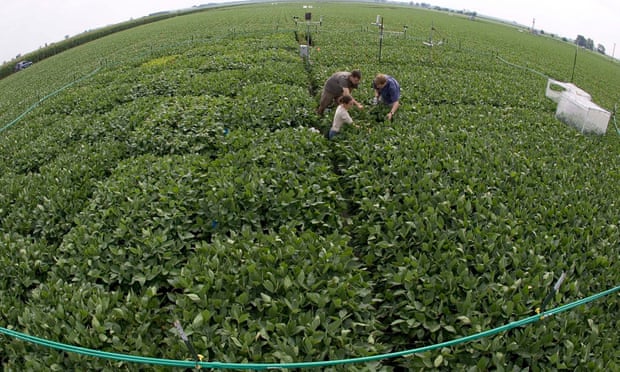
      A new study shows that plants growth from CO2 fertilization won't slow global warming. This means that we will not have that get-out-of-jail-free card that some of us were counting on.
      Increased CO2 in the atmosphere actually increased the out-flux of carbon dioxide from the soils. That is, it increased the rate of decomposition. In the long run, the increases in influx and out-flux will essentially balance out. This suggests that there will be little help from the biosphere for us humans-plants will not take up our emissions.
      Therefore, what do we need to do? What do humans need to do? This all goes to show that it is really up to humans, the emitters of greenhouse gases to take the lead on fixing the problem we started. The earlier we take action, the easier it will be.
       Don't you hope your children have a good life? Don't you want to your children notice how blue sky is? Don't you let your children know there are four seasons in one year? Join the action to slow down the climate change. Your little change will bring big difference.


To make a little change on yourself click it please: http://www.ecy.wa.gov/climatechange/whatucando.htm


By: Hanxiang Yu

http://www.theguardian.com/environment/climate-consensus-97-per-cent/2014/may/09/cant-count-on-plants-slowing-global-warming

Thursday, July 16, 2015

Volcanoes Slow Down Climate Change


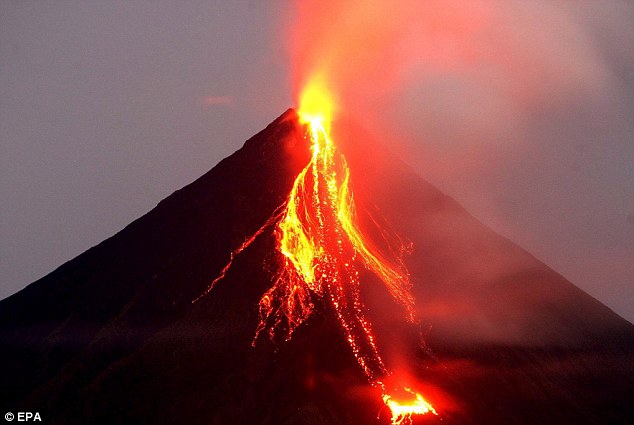
While many are concerned with climate change (currently 85% of the people who took our survey have this concern), they may have a found a new ally in the form of volcanoes. Over the last 10 years, volcanic aerosols (from volcanic eruptions) have acted as a natural umbrella to slow down global temperature increase from greenhouse gases. You can read a very complicated study full of technical jargon on this natural phenomenon here: http://www.reportingclimatescience.com/news-stories/article/volcanic-eruptions-slow-down-climate-change-temporarily.html

Take our climate change survey: http://goo.gl/fw6oby