Based on our survey results from last week, we discovered that while recycling seems to be a fairly common practice, more than one fifth of our readers never compost. For those unfamiliar with the term, composting is the process of recycling organic materials such as leaves and certain food waste into a rich, soil additive. While composting may sound like a daunting endeavor, it's one of the easiest and most beneficial ways to make a positive impact on our environment. And any positive impact towards slowing down climate change is a good thing!
Welcome to EcoLife! This blog, which is hosted by Portland State University students, aims to motivate, inform, and inspire change. We want you to learn about the complicated issues surrounding homelessness, while going beyond the tip of the iceberg. We hope to establish a connection with you through our posts regarding the lives and experiences of homeless individuals, expressed in these numerous stories and articles. We hope you enjoy our blog!
Showing posts with label greenhouse gases. Show all posts
Thursday, August 6, 2015
Composting Corner
Labels:
climate change,
composting,
environmental protection,
global warming,
green,
greenhouse gases
Tuesday, August 4, 2015
President Obama's Clean Power Plant Plan
President Obama has recently made some headlines in the news by introducing a controversial environmental and energy plan. The plan is basically an executive order to force coal fired power plants to reduce carbon dioxide emissions by 32 percent from 2005 levels by 2030. This is the biggest stance the president has taken to fight climate change. These said power plants account for about 40 percent of the United States’ greenhouse gas emissions. They are also one of the largest suppliers of powering electricity in the United States. The plan estimates that will, prevent 3,600 premature deaths, prevent 1,700 non-fatal heart attacks, prevent 90,000 asthma attack on children and prevent 300,000 missed workdays and schooldays. In addition it will also save the average american family nearly 85 dollars a year on their energy bills, save enough energy to power 30 million homes and save consumers 155 billion dollars from the years 2020-2030. It will also boost the American economy by creating tens of thousands of jobs, continuing to lower the costs of renewable energy and leads to 30 percent more renewable energy generation. These are all estimates of what life will be like in the year 2030.
Now, there are negatives with this plan, such as immediately it will be very costly to put in place. The proposal would also force the energy industry to deal wit the cost of decommissioning or retrofitting existing, functional power delivery systems and replacing them. This is a very costly affair. In addition, the Chamber of Commerce states that the plan places unrealistic demands on states, which results in more burden on individuals and businesses. The chamber believes that the level of CO2 emissions reductions is unachievable for the power plants.
However, even though this plan is far from perfect, it is a step in the right direction in terms of fighting climate change. The leaders of our country need to realize that climate change is a serious problem that needs to be address sooner rather than later. There is extreme weather happening due to the high levels of greenhouse gasses in the atmosphere. The united Sates alone lost 65 billion dollars on super storm Sandy and 2.3 billion dollars on Hurricane Isaac. President Obama realizes that climate change is a serious issue and is stepping in the right direction to combat it with this plan.
For more information here are some links:
Labels:
barack obama,
carbon,
Clean Energy,
climate change,
energy,
environment,
global warming,
green,
green energy,
greenhouse gases,
obama,
Pollution,
power,
power plants,
president obama
Friday, July 17, 2015
We can't count on plants to slow down global warming
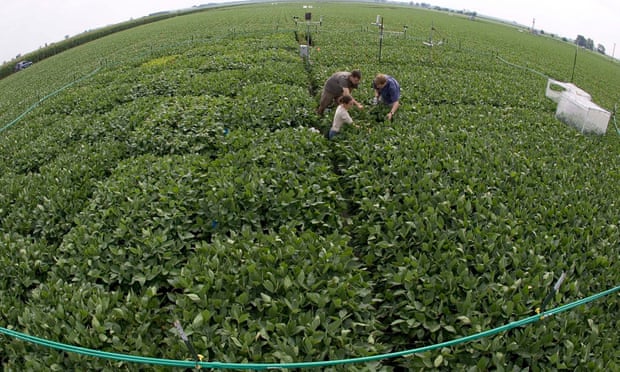
A new study shows that plants growth from CO2 fertilization won't slow global warming. This means that we will not have that get-out-of-jail-free card that some of us were counting on.
Increased CO2 in the atmosphere actually increased the out-flux of carbon dioxide from the soils. That is, it increased the rate of decomposition. In the long run, the increases in influx and out-flux will essentially balance out. This suggests that there will be little help from the biosphere for us humans-plants will not take up our emissions.
Therefore, what do we need to do? What do humans need to do? This all goes to show that it is really up to humans, the emitters of greenhouse gases to take the lead on fixing the problem we started. The earlier we take action, the easier it will be.
Don't you hope your children have a good life? Don't you want to your children notice how blue sky is? Don't you let your children know there are four seasons in one year? Join the action to slow down the climate change. Your little change will bring big difference.
To make a little change on yourself click it please: http://www.ecy.wa.gov/climatechange/whatucando.htm
By: Hanxiang Yu
http://www.theguardian.com/environment/climate-consensus-97-per-cent/2014/may/09/cant-count-on-plants-slowing-global-warming
Labels:
carbon dioxide,
climate change,
co2,
environment,
global warming,
greenhouse gases
Thursday, July 9, 2015
Some simple ways to help slow down climate change
The Washington Department of Ecology has a helpful list of simple, little things everyone can do to reduce personal use of fossil fuels and to help slow climate change. Most of it is common sense and practical (turning off unused appliances, changing lights, driving less), but some of it may be a bit too idealized (low-flow shower heads are nice in theory, but a little iffy in execution).
What YOU Can Do - Washington Department of Ecology
Stay tuned for information regarding the launch of this term's website.
And don't forget to follow us on twitter:
Follow @ecopol_project
| There are downsides to low-flow shower heads... |
Stay tuned for information regarding the launch of this term's website.
And don't forget to follow us on twitter:
Follow @ecopol_project
Labels:
carbon emissions,
Clean Energy,
climate change,
co2,
ecology,
fossil fuels,
green,
green tips,
greenhouse gases,
technology
Tuesday, July 7, 2015
What you can do?
What you can do?
CO2 is a major contributor to climate change, or "global warming. We burn fossil fuels such as gasoline, oil, coal, and natural gas to run our vehicle engines and to heat and light our homes. Burning fossil fuels increases the amount of carbon dioxide (CO2) in the atmosphere. How can we slow down climate change? There are several ways. Drive less, weatherproof you home, changes your lights, cut hot water use, adjust your thermostat, turn off power, purchase green power, plant trees and vegetation, recycle and reuse, shop smart. These actions are not hard for each person it is easy to do but it is the key to slow down the climate change. Let us protect our environment by doing little things.
By: Hanxiang Yu
Labels:
climate change,
co2,
environment,
global warming,
green,
green tips,
greenhouse gases,
recycling
Subscribe to:
Posts (Atom)