Pages

Tuesday, February 14, 2012

What is Peak Oil?


            The concept of Peak Oil is a very important topic, as the ideas the theory expels are both extremely evocative and troubling, when one thinks about how dependent the human race has become on fossil fuels in general, and petroleum, in particular. Basically, Peak Oil is the point in time that the global oil extraction rate of petroleum has peaked, as the vast majority of oil reserves across the world have already been discovered. “It is important to recognize that oil production peaking is not ‘running out.’  Peaking is the maximum oil production rate, which typically occurs after roughly half of the recoverable oil in an oil field has been produced, which will then began to decline” (Hirsh, 2005). Demand for fossil fuels and oil continues to increase, due to the reliance on fuel for transportation, food production, economic growth, and many products used in many people’s day to day lives. Because the extraction of the global oil reserves is in a state of constant decline, the supply of petroleum products will be unable to meet the growing demand. When these demands cannot be met, prices for petroleum products will rise exponentially, potentially resulting in a future where global economic depression is unavoidable.
            When oil extraction became common throughout the developed world during the early twentieth century, not much thought was given about the supply of oil running out, namely because there was so much of it. As industry continued to grow, oil was replacing coal as the most useful form of fuel, resulting in vastly increased population growth. The mass production of the automobile increased the demand for petroleum, as cars need to be fueled, and roads needed to be built. The Hirsch report, created for the US department of energy in 2005, examined the timing of Peak Oil, as well as what the impact on the world as we know it would be. The results of Hirsh report are startling: “The world has never faced a problem like this. Without massive mitigation at least a decade before the fact, the problem will be pervasive and long lasting” (Hirsch, 2005). Prices are expected to rise substantially as major future discoveries of oil are unlikely, leading to catastrophic results for the future and survival of the human race, if the world does not immediately act in investing in renewable fuels, and sustainable practices.
            There is some debate about when the global peak oil will occur. Pessimistic estimates claim that it has already happen, will optimistic estimates believe that it will occur in the next ten years, or reach some type of plateau. Whether or not you believe that most of the oil on planet earth has already been discovered, or that technology and renewable fuels can replace petroleum, one cannot deny that sooner or later, petroleum resources will run out. Because we are so dependent on petroleum, the world will feel an impact that is both harsh and sobering. Without changing how we create energy and sustain life, our future may be in peril.

Hirsch, R. (2005). The Inevitable Peaking of World Oil Production. The Atlantic Council of The     United States,16(3), 1-10. Retrieved February 12, 2012, from         http://www.acus.org/docs/051007-Hirsch_World_Oil_Production.pdf
Top of Form
Bottom of Form

Monday, February 13, 2012

Does Online Shopping Reduce or Increase our Demand on Petroleum?

An earlier post highlighted transportation as our primary use of petroleum, coming in at about 70% of our total usage. I immediately tried to think about what I can do to reduce that number. I already carpool or take public transit when I need to travel fast. I was feeling pretty good about my lack of driving, and then I realized – I order everything online. If someone else does my driving for me, is that any better? I did some research and came up with a few things I will be doing when I purchase online.

1. Consolidate orders for less packaging and less trips to my house
 
2. Choose USPS delivery when I have the option. They’re coming to my house anyway.

3. Buy the things online that I can't get with my bike or on the bus. 

The research I found had was largely supportive of online shopping. Most websites and scholarly articles all quote the same data that was published in 1999 by the Center for Climate and Energy Solutions. 1999 seems a little too old at this point to be relevant. This think tank essentially said that its better to shop online. Even though a driver needs to bring packages to your door and there is a lot of packaging involved, shopping online is usually more efficient. The figure frequently quoted, is “shipping 10 pounds of packages by overnight air -- the most energy-intensive delivery mode -- uses 40 percent less fuel than driving roundtrip to the mall. Ground shipping by truck uses just one-tenth the energy of driving yourself.”

I did a little digging on these numbers. Their scenario assumed a 20 mile round trip errand. Living in a decently developed urban area means that I drive significantly less than 20 miles when I go to the supermarket. I also wanted to see who these people were. They’re associated with the Pew foundation and ranted about by conservative organizations that say  “C2ES is just a retread of one of the main originators of the then-titled Global Warming scam of the Clinton/Gore administration.” You can make up your own mind about whether you want to believe this data.

I found a great article on Treehugger that goes into the pros and cons of online shopping v. supporting local mom and pop shops. What it really comes down to is, don’t buy stuff. Repurpose it, make it, and buy it used if you must. Okay, that isn’t always possible. When I need to buy things online, I’ll try to follow the steps above.


Saturday, February 11, 2012

What do we use oil for?


What sector of the United State economy consumes the highest percent of petroleum?  Commercial and Residential? Electricity? Maybe industrial? The answer is transportation. Approximately 70% of the petroleum consumed every day is used to transport people and products.


What does this mean for each of us? From one point of view, it might seem that our individual efforts to reduce the amount of oil we use in our daily lives or our efforts to lobby for changes in the way oil is consumed by our local community are insignificant. After all, reducing the amount of petroleum we use to power our home or our workplace across the entire nation would only affect a small percentage of total oil use.

To me, this fact about oil consumption points to the need for real change to happen in the transportation sector if we are serious about reducing total consumption.  How can we accomplish this?  I would encourage you to consider the ‘transportation cost’ in oil when going about your daily life. For example, where did the food you are eating come from? Did it have to travel a long distance by way of an oil inefficient method such as a truck?

It may be tempting to think that oil consumption will naturally drop over the next several decades simply because we are going to run out.  However, oil is going to be around for a lot longer. The United States has an estimated 1.5 trillion barrels of recoverable oil in the form of oil shale formations. To get an idea of how much oil this is, it is more oil than everything used by humans in all of recorded history. There is no danger of running out of oil anytime soon.

Does this mean we are hopelessly doomed to emit greenhouse gases into the atmosphere until the climate changes drastically on this planet?  That is a definite possibility. There is another way though. Becoming aware of all the different products oil is used in, especially in the transportation sector, and improving efficiency or finding alternative sources of fuel is a good first step.

Monday, February 6, 2012

Petroleum Conservation


The amount of petroleum being sucked out of earth is getting bigger because we are demanding for it. It’s getting bigger because, I buy my son a bike to ride to school on, because my wife needs a car to go to the neighborhood grocery store and because I need a 3000 cc SUV to go to my office which happens to be 3 km from my home. And also because I won’t turn off my SUV’s engine at crossings as I am rich enough to find it ‘uncool’.


And so as ‘I’, who can easily afford to buy fuel have taken it for granted and am using it in the most inefficient manner, am demanding for more of it. This ‘I’ isn’t just me or us. ‘I’ stands for every person around the globe who has got used to living with fuel and burning it to get energy. But its high time that ‘I’ must realize that the water in my bottle will not last long enough, if its not valued with the seriousness that it deserves. And ‘I’ who has learnt to live with fuel must learn to live with its conservation too. 


But this doesn’t mean that we stop using petroleum products all together. Our economy is dependent on it so much, that it is impossible to do that. And thus comes to light the importance of ways of using this fuel ‘Efficiently’. This word efficiently means that we do the maximum amount of work, using the least amount of energy. Leading organization around the world have put their best brains to the task of bring efficiency into all phases of their work. Manufacturers of automobiles, computers, kitchen appliances, industrial equipment and every other product that uses fuel or power, are looking at making their products more energy efficient. And so as citizens of the world, even we must contribute.

Industries are major users of petroleum, using approximately 40% of the total commercial energy used in the country. Thus conservation initiatives by the industries aided and enforced by the government save energy on a large scale. Especially small and medium scale industries, which use out dated machinery, have high energy consumption as compared to their production.


Renewable sources like wind power and solar, which are still not used up to their potential must not be ignored.

Saturday, February 4, 2012

Eating Petroleum


What if someone told you that the market you go to for your food was going to be closed? If you knew that the shelves in every market were going to be empty and not going to be replenished, would you think twice about your food?

People would eventually have to wonder where the food came from originally, how it was grown, and how did it got here. By 2040, we may have to ask ourselves these questions. This is because if we keep consuming food at the current rate we do, then our crude oil preserves will be exhausted by 2040. Shocking right? Most people do not realize how much oil goes into the production and delivery process of food. “The three main purposes for which oil is used worldwide are food, transport and heating. Agriculture is almost entirely dependent on reliable supplies of oil for cultivation and for pumping water, and on gas for its fertilizers; in addition, for every calorie of energy used by agriculture itself, five more are used for processing, storage and distribution.”

So, since we get all of our oil from countries in the Middle East, what would happen if they decide to keep raising the prices of oil (as they have done historically)? If oil would double or triple in price (due to scarcity & essentially their monopoly), what else do you think would double or triple? What if food was too expensive to buy for the average middle-class family? How many people would die? Would riots start? Or, would we harvest our own oil fields?

These are serious questions that we must think about. 2040 is only 38 years away, which is not far. So, people must know what we use petroleum for and that this resource is not an infinite one. How will our society (and every society) function without using any petroleum? The most rational answer is to resort to using alternative energy, along with simply using less of everything. Having healthier habits, such as walking somewhere instead of driving if the distance is close, buying organic and local foods or growing your own, consuming less material items and buying American made items. All of these small acts (of which there are many more) can help reduce the consumption of petroleum, which in the end is vital to the survival of our society.


“Almost every current human endeavor from transportation, to manufacturing, to electricity to plastics, and especially food production is inextricably intertwined with oil and natural gas supplies.” Below are only a handful of examples:
* Commercial food production is oil powered. Most pesticides are petroleum- (oil) based, and all commercial fertilisers are ammonia-based. Ammonia is produced from natural gas

* Oil based agriculture is primarily responsible for the world's population exploding from 1 billion at the middle of the 19th century to 6.3 billion at the turn of the 21st

* Oil allowed for farming implements such as tractors, food storage systems such as refrigerators, and food transport systems such as trucks

* As oil production went up, so did food production. As food production went up, so did the population. As the population went up, the demand for food went up, which increased the demand for oil. Here we go round the Mulberry bush

* Oil is also largely responsible for the advances in medicine that have been made in the last 150 years. Oil allowed for the mass production of pharmaceutical drugs, and the development of health care infrastructure such as hospitals, ambulances, roads, etc.

(Source: http://www.energybulletin.net/node/5045)

Ethanol Instead of Petroleum?

http://www.blogger.com/blogger.g?blogID=1516268549653363373#editor/target=post;postID=7980060036978079846

For more information
The world has relied mostly on petroleum for everything. For example, petroleum is used in transportation, technology, food and even in medical equipment. However, the question is for how long people will rely on petroleum? Although petroleum simplifies our lives, it brings lots of downsides for the environment, for people`s health and for the economy.
People have come to think about alternative fuels that can be used instead of petroleum, such as biofuels. The latter has recently been adopted in Brazil in order to reduce the amount of petroleum that is used in transportation, electricity and technology. However, Brazil has recognized that the biofuels have had negative impact on our health and on our environment.  Thus, they have switched to using another kind of fuel, ethanol.
Brazil nowadays is heavily relying on ethanol as an alternative fuel that is used in transportation and in electricity. People in Brazil think that ethanol is much healthier and less damaging to  the environment since it reduces air pollution and that improves people`s  health. In addition, it improves the country`s industries. Therefore, people in Brazil use ethanol for several different purposes regardless of its impact on the environment (Hira, Oliveira, 2009). From now on, it is recommended that we reduce petroleum use and find other kinds of fuels. In other words, we should reduce the materials that contain petroleum, such as plastics and some kinds of makeup, and reduce using electricity. In addition to that, we should focus on how we consume little of petroleum on transportation by limiting the transportation means use , as well as how we can reduce the amount of petroleum that we use in our electricity and technology by using them as we need  them as possible. However, people should switch to using natural kinds of materials that do not contain any kind of petroleum in order to protect their health.
Reference:
Hira. A., &Oliveira. L.G. (2009). No Substitute for Oil? How Brazil developed its ethanol
Industry, 37(6).http://www.sciencedirect.com.proxy.lib.pdx.edu.http://www.sciencedirect.com.proxy.lib.pdx.edu/

Friday, February 3, 2012

Decreasing Demand

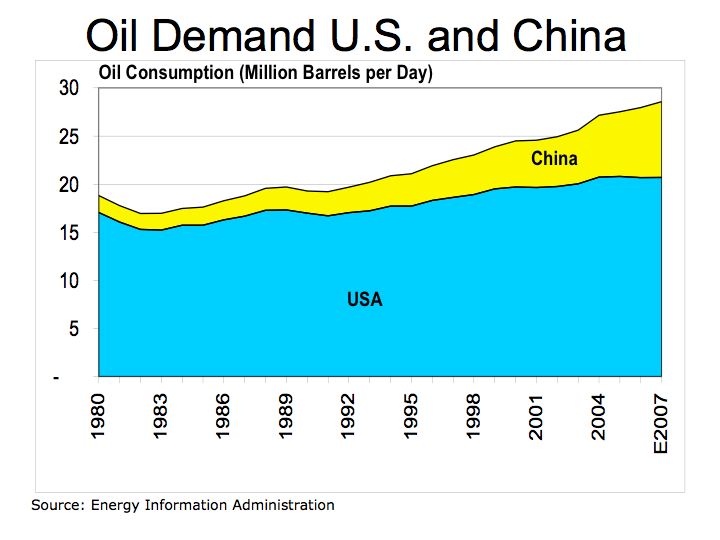
Fairly soon in the near future, our demand for fossil fuels will exceed our supply. America currently depends on the Middle East for much of our supply. So does China. What happens when this supply begins to thin out? Demand isn’t going anywhere, but what can we say for the supply? If anything, demand is going to steadily rise because there are going to be more people on the earth in the near future.
                One way we can limit our demand for fossil fuels is to stop driving all together. Instead of your morning commute in your car, why not take the bus? If more people relied on public transportation, I could see the demand for fossil fuels go down a bit. Portland, OR is famous for it’s biking community. What if more people decided to ride their bikes to work, instead of driving? Of course this may force you to change your living situation. You may have to move closer to your work. Although this may be a big change for you, it would make the environment much better because of this change you can implement.
                Another way we can limit our demand for fossil fuels is to boycott materials and products that are made from petroleum. This may mean not buying that new laptop, or buying organic fruit instead of the generic brand. This may mean that you do not purchase new clothes that were made with petroleum. Perhaps you could buy your clothes second hand at thrift stores such as Goodwill or Salvation Army. This would certainly help us decrease the demand for petroleum and fossil fuels.
                Look around your own household. How many of the products you own were made with petroleum? These are just a couple of my ideas on how we can decrease the demand for petroleum. What are ways that you think would be effective in decreasing the demand? I don’t have all the answers, but I’m hoping you may be able to come up with some as well. Boycotting can be effective only if it is done on a large enough scale. So I challenge you to think about products you use and ask yourself if you really need that product.


References
Droitsch, Danielle. "Key to U.S. energy security is decreasing oil demand, not increasing oilsands supply." Pembina Institute. (2011): 1-5. Print. <http://www.pembina.org/blog/515>.