Pages

Sunday, June 8, 2025

You Can’t Heal in a Tent: The Human Cost of Ignoring Mental Illness

 By Danielle Butchee

He had not stepped into a shower in weeks, his unkempt hair and unwashed clothes telling a story of neglect. She gripped a crumpled plastic bag brimming with outdated medication, mumbling fragments of a conversation that echoed only in her mind. This is the hidden crisis of Portland—not just the visible struggle of homelessness, but the quiet, relentless suffering of untreated mental illness that plays out each day on our sidewalks, in bleak underpasses, and throughout public parks. It lurks in every corner, weaving a complex tapestry of despair and isolation that often goes unnoticed by those who pass by. As of 2023, Oregon has the highest rate of mental illness in the nation and ranks worst for access to treatment (OPB, 2023). On any given night, thousands of Portlanders sleep outside. For many, their homelessness is not a cause but a symptom—a direct result of untreated trauma, post-traumatic stress disorder, bipolar disorder, and substance dependency. The city of Portland openly acknowledges the urgency, referring to homelessness as a “humanitarian crisis” that requires “coordinated, compassionate action” (Portland.gov, 2024).

But when it comes to mental health, compassion alone isn't enough—we need infrastructure, access, and accountability.

Where the System Breaks

Unhoused individuals who are dealing with mental illness and addiction often find themselves in survival mode. A 2020 national study revealed that co-occurring conditions, such as schizophrenia combined with opioid use disorder or trauma along with alcohol dependency, are common among unhoused people (Santa Maria et al., 2020).

Despite this reality, Portland's response has remained fragmented. Some shelters continue to enforce abstinence-only policies, denying beds to those who have not yet detoxed. Additionally, many shelters lack trauma-informed staff or onsite medical care. Consequently, individuals with the greatest needs are often the most excluded, leading them to cycle through emergency rooms, county jails, and street sweeps, all of which fail to provide sustainable pathways to recovery.

Even when assistance is available, it is often hidden behind lengthy waitlists. Caseworkers are overwhelmed, and long-term psychiatric care has become increasingly rare. In some discussions, Oregon leaders have even contemplated compulsory treatment, which would require individuals to undergo care as a last resort. While this approach may stabilize some lives, it raises ethical concerns about autonomy and consent within a system that has consistently failed to provide real options beforehand (OPB, 2023).


What Could Compassion Look Like?

Compassion means meeting people where they are. That starts with:

  • Harm reduction shelters that allow substance use but provide overdose prevention, clean supplies, and recovery services without judgment.

  • Housing First programs prioritize stable housing as the foundation for health.

  • Mobile crisis teams that dispatch social workers and clinicians, rather than police officers.

  • Permanent supportive housing that includes wraparound services for trauma, mental health, and addiction treatment.

We know these models work. Cities like Houston, Salt Lake City, and even Vancouver, WA, have all made measurable strides using coordinated Housing First approaches. In Portland, we need more of them—and more investment in making them sustainable.

Why Should You Care?

Because ignoring this crisis doesn’t make it disappear, it just drives it deeper into the margins.

Because it’s not just about someone else’s brother, mother, daughter, or friend—it could be yours. Healing cannot begin until people are off the streets, supported, and seen as worthy of care.

Every person deserves a chance to heal, to feel safe, and to be seen—not as a problem, but as a person with potential. By donating to New Narrative, you help transform isolation into support, trauma into resilience, and survival into recovery. Your gift powers mental health care, housing, and hope for those who need it most.

👉 Click HERE to give now and be part of someone’s turning point.

Refrences

Menza, T. W., Lipira, L., Bhattarai, A., Cali-De Leon, V., & Orellana, E. R. (2020). Prevalence and correlates of transactional sex among women of low socioeconomic status in Portland, OR. BMC Women's Health, 20(1), 219. https://doi.org/10.1186/s12905-020-01088-1

New Narrative. (n.d.). Donate. https://newnarrativepdx.org/donate/

Oregon Public Broadcasting. (2023, April 1). When homelessness and mental illness overlap, is compulsory treatment compassionate? https://www.opb.org/article/2023/04/01/oregon-california-when-homelessness-and-mental-illness-overlap-is-compulsory-treatment-compassionate/ 

Portland.gov. (2024). Homelessness response and action. City of Portland. https://www.portland.gov/wheeler/homelessness 

Have you heard of the BDS Movement?

Have you heard of the BDS Movement?

.Elora Batson.


https://bdsmovement.net/ 


Something I reference, preach, and appreciate in daily life as a voter and consumer in the United States is the BDS boycott list. It's a small way I feel I have control over the way my dollar is used in the grand scheme of things, and I really do believe long-standing boycotts like this have (and are starting to presently) have effects on large corporations, their alignments to truth and morality, and the power they have to skirt working practices that are humane and sustainable. The small actions and cries from people matter, and the BDS Campaign seeks to unite these small voices into influential change.


The initial stands for Boycott, Divestment, Sanctions. Launched in 2005, this coalition of Palestinian organizations has sustained this model of strategic social pressure to aid in liberating Palestinians from the illegal occupation of Israel. The language and information on this site are as dire as ever as Israel continues to grow more violent and extreme in their efforts to gain control of Palestine. With every piece of propaganda allowed to criminalize and dehumanize Palestinians, there needs to be tenfold effort to dispel it. Part of combining the voices of many includes having clear and direct representations of the truth from the most vulnerable parties, and the BDS movement in its actions and writings has always been consistently accurate and direct in the representation of Israel's apartheid. In this day and age, becoming familiar with the language the oppressed use to speak about this conflict is vital to seeking an end that preserves the life and rights of everyone.

The BDS movement is particularly powerful in the way it effectively communicates such a nuanced and devastating situation, one with a history that often gets smoothed over in the process of being shared. In America, a large voting base is unswayed and unmotivated for change if we can learn anything from the last election. I believe part of bridging politically unmotivated people to small concerted action is the relevance of coordinated organizations like the BDS movement. With community investment in this organization, there comes a level of legitimacy, which grows its influence, and the cycle continues. Many people ask, ‘How can I help?’ and I can honestly say, this organization has many ways to start.


Vulnerable by Design: Portland’s Failing Safety Net for Homeless Women

 By Danielle Butchee


She found herself with nowhere else to turn. 


On the cold pavement outside a shelter for homeless youth in Portland, she spent her nights vulnerable and exposed. It was there, under the harsh fluorescent lights of the city, that a man crept back into her life—an individual who had violated her before. In broad daylight, he reappeared and assaulted her once more, shattering any semblance of safety she had hoped to find.


Court documents reveal a chilling detail: he did not rush away in panic; instead, he strolled away with an unsettling calmness. Though she survived the ordeal, her experience mirrors a grim reality that remains largely hidden: for those unhoused in Portland, the challenge extends far beyond simply lacking a roof over their heads—it is a relentless battle against being perpetually hunted (KPTV, 2024).


A 2023 exposé by KGW painted a stark picture of daily life for unhoused women in Portland, describing it as a continuous struggle for safety and dignity. Many steer clear of shelters due to overcrowding or the lurking threat of violence within. “You don’t sleep,” one woman articulated with a heavy heart. “You doze. One eye open. All the time.” The weight of insecurity looms large, stealing away the comfort of rest and peace (KGW, 2023).

More Than an Isolated Case—It is a Pattern

A national study conducted in 2020 revealed that 1 in 4 homeless young adults reported being coerced into sex. Only 29% of those who experienced such assaults received a medical exam afterward (Santa Maria et al., 2020, p. 2). Many did not want to involve the police, while others believed that no one would care.


In a local study performed in 2020 on women in Portland, it was found that 23.8% of women who had experienced extensive childhood trauma engaged in transactional sex, often as a means of survival. These women were significantly more likely to be victims of recent sexual violence (Menza et al., 2020).


This situation exemplifies structural failure: public policies that criminalize the symptoms of homelessness without addressing the underlying causes, such as trauma, poverty, addiction, and systemic neglect. When access to rape kits, housing, and trauma care is replaced with handcuffs, survivors remain trapped in a cycle of victimization.


Why Should You Care?

This city belongs to us all. Safety should not depend on where you live. Ignoring this issue is more costly than addressing it, as it impacts emergency care, policing, and human lives.

If you believe Portland can be a place where every woman feels safe and valued, you can contribute to that change. The SAVE Fund assists survivors of violence in reclaiming their stability and dignity through emergency financial support.

👉 Click here to contribute and help restore hope, one life at a time.

References

KPTV. (2024, September 5). Man gets 14 years in prison for raping homeless woman in NE Portland. https://www.kptv.com/2024/09/05/man-gets-14-years-prison-raping-homeless-woman-ne-portland/

KGW Staff. (2023, May 15). Being a homeless woman in Portland: A daily fight for protection. KGW. https://www.kgw.com/article/news/local/homeless/being-homeless-woman-portland-daily-fight-protection/283-1bc014cd-a248-46df-a2bd-2de1b34ada74

Menza, T. W., Lipira, L., Bhattarai, A., Cali-De Leon, V., & Orellana, E. R. (2020). Prevalence and correlates of transactional sex among women of low socioeconomic status in Portland, OR. BMC Women's Health, 20(1), 219. https://doi.org/10.1186/s12905-020-01088-1

Santa Maria, D., Narendorf, S. C., Ha, Y., Ramaswamy, M., & Padhye, N. S. (2020). Gaps in sexual assault health care among homeless young adults. Journal of Interpersonal Violence, 35(23–24), 5760–5782. https://doi.org/10.1177/0886260517725730


Don't let homelessness become the end destination for drug addicts-------------Leandro Li

 If you have recently walked the streets of Portland or caught a glimpse of those tents in the alleys of San Francisco, you might wonder how many of these people are addicts. This is not just curiosity; it is a crucial issue related to public health, social policies, and even moral responsibility. In this blog, we have examined a lot of data to explore the complex relationship between the homeless and drug addiction, as well as how our society should respond.


How prevalent is drug use among the homeless?

A recent report from the University of California, San Francisco, indicates that among the 3,200 homeless adults surveyed, 65% admitted to using illegal drugs at least three times a week. In Portland, the figure is even higher from 53% to 88% of the homeless reported engaging in drug use, and it was not just "occasional experimentation", but rather long-term and habitual use.


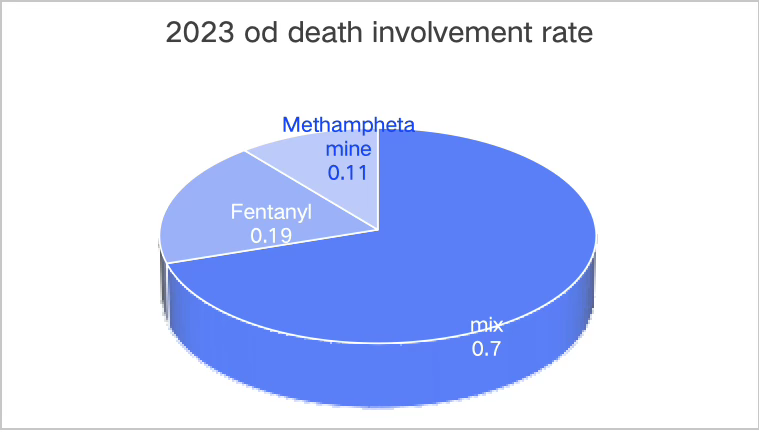
What is even more worrying is that fentanyl and methamphetamine are rampant on the streets. In Portland, 89% of drug overdose deaths are related to fentanyl, and the usage rate of methamphetamine is as high as 81%. This means that if you see a homeless person using drugs on the street, they are very likely to be struggling with either one or both of these substances. 


How difficult is drug rehabilitation? How many people manage to successfully quit?

Drug is easy  to get, but drug rehabilitation is difficult. The success rates of drug withdrawal vary greatly depending on the type of drug:

Although the recovery rate for methamphetamine after the first year of withdrawal is approximately 40% - 60%, in the long run, only 6% of people remain sober three years later. After systematic treatment, the one-year withdrawal rate for cocaine can reach 25% - 75%, but the risk of relapse is extremely high, especially within 6 to 12 months after withdrawal. These figures tell us that drug rehabilitation is not a matter of will, but rather a long-term and difficult battle between the body and the mind. 


The Drug Rehabilitation System in Portland: Challenges and Obstacles

However, Portland does have access to drug rehabilitation resources. The Hooper Detox Center offers services such as inpatient detoxification and medication-assisted treatment. However, the reality is that there are a severe shortage of beds. Each year, 2,700 people apply, but the center only has 65 beds, leaving nearly 60% of them rejected. The waiting time varies from a few weeks to several months, and many people relapse, go missing, or even die during this period. In other words, even if someone wants to quit drugs, the system is unable to accommodate them.


International Comparison: Different Approaches to Drug Addiction in Different Countries

The ways various countries deal with drug addiction vary greatly: China and South Korea often adopt compulsory detoxification, with the police repeatedly sending drug users to detox centers. Portugal has decriminalized drugs, treating drug use as a public health issue rather than a crime. The government provides free treatment, psychological support, and job training. Each of these models has its pros and cons, but they all point to a core question: Is the laissez-faire free-choice model truly applicable to the drug-ridden streets of the United States?


In the current situation, what we urgently need to do is to expand the resources for drug rehabilitation, increase the number of beds, and provide opportunities for those who have the intention to quit drugs to save themselves. After this, whether to adopt compulsory treatment or follow the Portuguese approach of support rather than punishment still requires much discussion. Behind today's figures are real people, they might be veterans, women who have suffered from domestic violence, patients with mental illnesses, or just ordinary people pushed into despair by the economic recession. Drug addiction is not their starting point, nor should it be their end point. The issue is not why they took drugs, but how we can build a society that can prevent ordinary people from completely falling into degradation during the economic recession.


References:

https://katu.com/news/local/new-deflection-program-challenged-by-lack-of-detox-facility-space-in-multnomah-county-hb-4002-drugs-recriminalization-jail-portland-police-oregon?utm_source

https://pubmed.ncbi.nlm.nih.gov/34224485/

https://centralcityconcern.org/recovery-location/hooper-detoxification-stabilization-center/?utm_source、https://www.rollinghillsrecoverycenter.com/methamphetamine/success-rates?utm_source=chatgpt.com#elementor-toc__heading-anchor-2

https://americanaddictioncenters.org/rehab-guide/addiction-statistics-demographics/homeless?utm_source

https://www.ucsf.edu/news/2025/02/429486/how-common-illegal-drug-use-among-people-who-are-homeless?utm_source

https://www.portland.gov/wheeler/homelessness?utm_source

Saturday, June 7, 2025

Portland's Homeless:Where Will they Go? ————Iorwerth Wu

 Portland's Homeless:Where Will they Go? 


     Portland is facing a visible and growing homelessness crisis. With tents lining sidewalks and RVs parked across neighborhoods, the city's landscape has changed—but the bigger question remains: Where can people without homes actually go?

        As of 2023, over 6,297 people in Multnomah County are experiencing homelessness. That's a 65% increase since 2015. While the causes are complex—ranging from housing costs to untreated mental illness—the immediate challenge is space. There simply aren't enough places to go.


Current Options Are Limited

  • Shelters are often full or unappealing due to safety concerns.

  • Tents and RVs offer more freedom, but no security.

  • Safe Rest Villages, run by the city, provide supervised camps with services—but space is scarce.

  • Tiny homes and supportive housing sound promising, but take time and money to build.

Even with the city’s efforts to expand shelter beds and support centers, thousands remain outside every night.

The Real Question

Without large-scale, long-term investment, most unhoused people won’t go anywhere—they’ll stay right where they are: on sidewalks, in parks, under overpasses. “Cleaning up the streets” without real alternatives just means moving people around, not solving the problem.

Portland has a chance to lead with compassion and strategy. If it can scale its programs and treat homelessness as a housing and health issue—not just a visibility issue—the answer to where they will go might finally be: home.

Sources

  1. Multnomah County – 2023 Point-in-Time Count Summary

  2. 2015 Point-in-Time Count Report 

  3. City of Portland – Safe Rest Villages Overview

  4. Axios Portland – Mayor Wilson's Homeless Strategy

  5. AP News – Portland's New Homelessness Approach

  6. Oregon Legislative Fiscal Office – Housing and Eviction Legislation

How Healthcare Access Fails the Homeless

by Manal Alkindi, June 7 2025 


When I get sick, I book a doctor’s appointment online. I show up, swipe my insurance card, and I’m seen—usually within an hour. I might complain about the wait, but I don’t have to wonder if I’ll be turned away. I don’t have to explain why I don’t have an ID. I don’t have to worry about being judged for how I smell or what I’m wearing.

But for people experiencing homelessness, accessing basic healthcare can feel like navigating a locked system without a key. And in a country that spends more per capita on healthcare than almost any other, that’s deeply disturbing.

Being Sick on the Streets

Homelessness doesn’t just increase your risk of illness—it makes recovery almost impossible. Without a clean place to sleep, store medication, or even shower, people dealing with chronic illness, wounds, infections, or mental health struggles are constantly fighting an uphill battle.

According to the National Health Care for the Homeless Council (NHCHC), people experiencing homelessness are far more likely to suffer from chronic conditions like diabetes, hypertension, heart disease, and mental illness—and they are three to four times more likely to die prematurely than the general population [1].

And yet, many go without care entirely.


The System Isn’t Built for Them

Most clinics and hospitals assume certain things: that you have an ID, an address, a phone, maybe even insurance. But these are luxuries many unhoused people don’t have. And without them, people can be denied care—or fall through the cracks entirely.

Even when they do get access, it’s often through emergency rooms, which are overburdened, expensive, and not designed for long-term or preventative care. This leads to a cruel cycle: people get sicker, go to the ER, get discharged without a safe place to recover, and end up back in the ER days or weeks later. It’s costly, exhausting, and entirely preventable.

In 2022, HUD reported that nearly half of all emergency room visits by people experiencing homelessness were for conditions that could have been managed by outpatient care—if only that care had been accessible [2].

Real Solutions Exist—We Just Don’t Prioritize Them

There are models that work. Mobile clinics, community outreach teams, and Housing First programs with integrated healthcare have shown incredible results. When people have housing, they’re better able to keep appointments, take medications, and follow up with providers. Their ER visits go down. Their health outcomes go up.

The problem isn’t that we don’t know what works but rather we don’t invest in it.

I’ve never experienced homelessness, but I’ve had moments in my life where I avoided going to the doctor because of the cost. I’ve sat in waiting rooms feeling anxious about medical bills. And I’ve wondered, What if I didn’t have insurance? What if I didn’t have an address? What if I didn’t have anyone at all?

The more I learned, the more I realized that homelessness isn't just a housing crisis—it's a healthcare crisis too. You can't heal without stability. You can't stay healthy when you're treated as invisible.

1. National Health Care for the Homeless Council (2022). “Homelessness & Health: What’s the Connection?”

2. U.S. Department of Health and Human Services. (2022). “Health and Homelessness: Integrating Services to Improve Health Outcomes”

What happens after our people are housed: How we support healing and sustainability over the long haul.

By Miguel S. Chanocua June 7, 2025

If you read my last blog, I spoke about why it is important for Indigenous people to have safe and stable housing. Having a place to call home is a huge deal, especially when you’re experiencing or have experienced homelessness like I did. But having a home is not the fix and is just a first step and the real work is in being able to help people to “stay” housed for the long haul, especially for our Indigenous communities who are at a high risk of facing trauma, health problems, and poverty. 

That said, what does it take to keep people housed? I will tell you that it takes a lot of support, sometimes throughout a person's whole life. The very same organizations that I mentioned last week like the Native American Youth and Family Center (NAYA), Future Generations Collaborative (FGC), and the Native American Rehabilitation Association (NARA) do not stop after they house someone, they also provide them with resources to help them get back on their feet permanently, providing tools to stay in their homes.

Indigenous individuals and families are partnered with case workers who provide them with long term support who help provide the basic necessities like food, clothing, and jobs. Their caseworkers understand that having money doesn’t solve all of their problems and that having someone who understands exactly where they come from is huge, especially when the caseworker is Indigenous as well makes it easier for them to talk about their struggles. 

At the housing projects they are offered more than just a home they are offered spaces where they can participate in cultural gatherings and community events where they are celebrated among people who look like them. This is important because for Indigenous people being able to practice our culture is how we stay connected to our community, our people, and our traditions.

Photo of a Neerchokikoo Powwow (Top) and Native Professionals and Friends Night (bottom)from NAYA

Events that support the people’s well being keeping them strong

Powwows and other events take place often in these spaces where they can come and make connections with other Indigenous people in safe environments, which in Indigenous shared cultures is critical to our well being. These organizations also provide events that are Indigenous focused to help them stay healthy and safe in facilities and out in the community with things like the Elders and Natural Helpers who are a part of the Future Generations Collaborative that  go out into the community to educate Indigenous people about how to stay safe, build valuable skills, and promote traditional healing to address and combat historic and intergenerational traumas.

Elders and Natural Helpers engaging with the community about safe practices from FGC

Making sure that our people stay off the streets and in homes will take more than just giving them the keys, it takes the community caring for each other through culture. Having people who will listen to you and have programs that are tailored to the challenges that Indigenous people face. We know what approaches work best for our people that will last and heal over the long haul, not just the immediate need that honors our cultures.

If you would like to learn more about how to support Indigenous people and families who are experiencing homelessness here are the websites, take a look and see how you can help stop Indigenous homelessness.

Native American Youth and Family Center (NAYA) 

Future Generations Collaborative

Native American Rehabilitation Association (NARA)