Pages

Monday, August 10, 2015

Please give these lives a chance to live


Climate change effects on ocean animals!

The polar bear, is affected both by the reduction in sea ice and by reduced stocks of its primary food, the ringed seal. Sea ice is decreasing throughout their Arctic range due to climate change. Ice reduction decrease the abundance of seals, and increases the amount of energy and time needed for hunting, leaving less energy for reproduction. Rising temperatures means that large areas of the ocean that were once frozen throughout the year now become open water.
Climate change directly affects the reproduction of sea turtles in three ways. First, sea level rise will affect significant nesting beach areas on low-level sand beaches such as Bonaire, the Maldives and the Great Barrier Reef. Second, rising temperatures increase the chance that sand temperature will exceed the upper limit for egg incubation, which is 34 degrees C. Third, rising temperatures bias the sex ratio toward females because temperature during incubation determines the sex of the egg. Loggerhead turtle nests in Florida are already producing 90 percent females owing to high temperatures, and if warming raises temperatures by an additional 1 degree C or more, no males will be produced there.
North Atlantic right whales, which can grow to more than 55 feet long and weigh 70 tons, range from Nova Scotia to the southeastern United States and migrate the length of the East Coast. Today there are fewer than 500 right whales left in the world. These animals have been protected since 1935 and listed as endangered since the early 1970s.

THERE ARE SO MANY OTHER KINDS OF OCEAN ANIMALS ARE AFFECTED BY CLIMATE CHANGE. THE PLANET ONT ONLY BELONGS TO YOU ALSO BELONGS TO THESE LIVES. PLEASE GIVE THESE LIVES A CHANCE TO LIVE OTHERWISE YOU WILL BE LONELY IN THIS WORLD OR YOU WILL BE NEXT TO DISAPPEAR FROM THIS WORLD. 

by Hanxiang Yu
http://www.neaq.org/conservation_and_research/climate_change/effects_on_ocean_animals.php

Do you pee in the shower? You are saving the planet!


Peeing in the shower, some of us do it, some of us think it is gross. I am going to show you why peeing in the shower could help save the planet, and hope you learn to see some situations in life for more than face value. There are so many things that all of us can do to help mitigate the effects of climate change. There is a lot of great suggestions regarding how each individual can pitch in to reduce our impact on the planet:


For some it can seem daunting; many of us are overwhelmed by the vast amount of information out there, and all the perceived steps required of us in order to make a difference. When presented with the effort required in order to minimize the effects of climate change, one can feel burdened and afraid that they are not able to drastically change their lifestyle. But let me remind you of the power of aggregate effort. If we all make at least a little effort, the additive effect will be great. Consider a penny, it doesn’t seem like much money; if every United States citizen added a penny to a pot of money, that would be equivalent to over three million dollars! So I hope you realize that a little effort can make a big difference. There are numerous ways to help mitigate the effects of climate change without having to completely change your lifestyle:


One simple way to minimize your impact on the climate and save money and time, all from the comfort of your home is to change the way you use water. Increased water usage means higher water bills, heating bills, carbon emissions associated with warming and transporting the water, and a worsened drought that many areas are currently experiencing. There are copious actions that will reduce water usage; the one that I hope gets you interested is peeing in the shower.

The next time someone berates you for peeing in the shower like George Costanza, you can refute his or her claims with your own - you are saving the planet. In 2014 the University of the UK started a campaign, urging the students to urinate while they shower. They determined that if a household urinated in the shower rather than flushing the toilet one extra time a day, they would save 1,157 gallons of water a year. If you were worried about hygiene, the university released with the campaign a list of literature that suggest there is no hygiene issue pertaining to urinating in the shower. Not only will you help save the planet, you will help your wallet with les water usage. So the next time you shower, remember the peeing can help prevent the plight of the planet.

In addition the above suggestion, there are many other small ways to reduce water usage and save money - including but not limited to:

-Reduce the amount of time you are in the shower
-Turn off the shower as you wash up and turn it back on to rinse off
-Get low flow showerheads and toilets
-Use rainwater-collecting containers for watering gardens
-Don’t leave the water running while washing dishes
-Use yard landscaping that requires less water
-Use your washing machine on the cold setting

What is your Carbon Footprint?


Understanding how much your particular lifestyle has on the environment and climate change is hard.  Some, might think they do plenty to preserve the Earth while in reality they are not doing too much at all.  Below I have two links in which you can track your carbon footprint.  The first link will take you to a website where you can track both your carbon footprint for both yourself individually as well as the members of your household.  It firsts asks you about your home energy, then your traveling habits, as well as your eating and recycling routines.  At the end of the survey you will know about how much carbon dioxide you put in the air per year and then it will show you steps to take to reduce your impact as much as you can.  

The second survey is done through the World Wildlife Fund.  It asks very similar questions but for your results it shows how many Earths we would need to sustain life if everyone lived the way that you lived.  

Both of these surveys took less than 5 minutes and you learn a whole lot about yourself and how to better care for the environment.  Finally one last note.  These are just two ways to find out your carbon footprint.  There are many sources online for you to use and there are even a few apps for your phone out there!


Take the surveys here:


By: Garrett Sanders
The Consequences of a 2 Degree Celsius Increase in Global Average Temperatures

If you think that a 2 degree C increase in global average temperatures is not a significant change to alter the quality of life of million of people around the world, think again.  According to Stern (2006), the current concentrations of CO2 in the atmosphere is 430 (ppm) which is about 1.5x more than the concentration level prior to industrialization.  If current pollution trends continue, he explains that in just a few more decades the world will be warmer likely reaching 550 ppm at which point worldwide average temperatures will increase by 2 degrees Celsius as estimated using climate models.

According to Stern, deaths associated with cold temperatures will decrease at higher latitudes regions but many more people will die worldwide from heat stress, malnutrition, dengue, fever, malaria and other related illnesses.  Stern points out that fatal scenarios such as deadly heat waves killing tens of thousand of people will be a dismal routine in just 35 years from now.  He further indicates that agricultural losses will reach tens of billion of dollars and marine ecosystems will suffer as a consequence of ocean acidification which in turn will negatively affect fish stocks.

An inherent problem associated with climate change, according to Stern, is that its impacts are unevenly distributed because those who will suffer the most right from the start are the poorest people and the poorest nations.  Stern points to some of the vulnerabilities of poor countries which include a variable rainfall, a dependency on the agricultural sector, inadequate health system, and (on average) they are today warmer than rich countries.

Climate change affect all of us and together we can take steps to reduce carbon emissions.  Stern lists four different ways that can help us improve environmental quality: adopting low-carbon techniques for transport, heat, and power; decreasing demand for pollution intensive products and services; increasing efficiency and avoiding deforestation.

If you would like to learn more about ways to reduce pollution, click on the links below.

http://jama.jamanetwork.com/article.aspx?articleid=197911

http://www.nature.org/ourinitiatives/urgentissues/global-warming-climate-change/threats-impacts/

Green Branding: Feeling Green versus Doing Green

At a slow and steady pace, society in the United Stated is becoming more "green," from industries backing away from partners that are big polluters to an increase in recycling and composting options in our own local communities. My own grandmother has said that "back in our day, we were not concerned with the environment like your generation is, and it's really good that everyone's into it now." This is also apparent in the increase of organic food sales, which have increased over $22 billion since 2001. With the consistent increase in our green values has also opened the door for better consumer options. Now, grocery stores have designated areas for organic produce, and also proudly mark locally produced items.

For many of us, the coherence with our social values is worth the added premium. But how do we know when the green label is truly better for our environment, or rather a business ploy to charge more money while making us feel better (but not actually do better)? The following are examples of this and information on how we truly can make a more environmentally conscious and health conscious decision at the market:

Organic versus Natural - "The difference between a food with the 'organic' seal and a food claiming to be 'natural' is vast," according to the Cornucopia Institute.

"Simply put, organic food production is regulated by third party, government-accredited certifying agents, who ensure that farmers and processors follow a strict set of federal standards aimed at promoting ecological sustainability and avoiding materials that are hazardous to the environment and human health."

"With the exception of meat and poultry, so-called “natural” foods are not regulated and have no uniform set of standards to which they must adhere (and oversight on natural meat is ridiculously lax). Usually, corporate marketing departments determine whether a food should carry the “natural” label on its package, as a marketing tool to appeal to health conscious and environmentally aware consumers."

Conclusion: look for food items with the USDA Organic seal, or if you have more time research brands online to see if they comply with organic measures but have not yet completed the costly process of obtaining the seal, rather than purchasing foods labeled natural, as the latter can still contain toxic chemicals even though they are being charged a green premium.


Green Cleaners - "Americans spend more than $600 million annually on cleaners that make some claim to environmental friendliness," writes Brian Palmer of the Washington Post. But with ingredients like sodium laureth sulfate, lauryl glucoside and sodium benzoate, covered up by branding scents of green tea and lavender, how do we really know which cleaning products are better than others?

Palmer proposes a three-pronged approach. First, purchase cleaning products at Whole Foods, a company that has an extensive process of vetting the cleaning brands that it sells. Second, and for those with more time and who would like to do research on their own, check out the companies online, reviews, and the meaning of their ingredients. Not enough time in the day to research every product? No worries! The EPA has already taken a head start on this, and you can view their findings at: http://www.epa.gov/greenerproducts/. Third, check the cleaning product's packaging to see if it has certification from Ecologo or Green Seal to see if they are truly green.

Conclusion: just because it says it's green does not make it so. For real life examples, check out the following. In the first, we see Clorox multi purpose cleaner, with harmful ingredients to both humans and the natural environment (once in the water system). So they made Clorox's Green Works multi purpose cleaner. Despite the fancy name and environmentally friendly looking packaging, the ingredients list reveals that it still contains harmful toxins just like regular Clorox. However, unlike regular Clorox, Green Works charges more to take advantage of consumers attempting to be more environmentally conscious. The third is of Method multi purpose cleaner. They can prove their product's greenness with one bold claim: drink it (yes, drink it), and you will not get sick. Compare this with Clorox, which you could drink and have a much worse reaction than getting sick.

This illustrates that just because a product says it is green does not make it so. More research is needed, and their are tools - from grocery store policies to government websites to product certifications - that can all help us as consumers make better choices for ourselves, our communities, and our planets. The best part is, we can start today. For in the echoing words of Bob Brown, "The future will either be green or not at all."

For a report on the growing green movement in small business: http://biggreenopportunity.org/wp-content/uploads/2013/05/Big-Green-Opportunity-Report-FINAL-WEB.pdf

For information on organic versus natural labels: http://www.cornucopia.org/natural-versus-organic/

For more information on selecting the right green cleaning products: http://www.washingtonpost.com/national/health-science/how-to-know-if-your-green-cleaner-is-really-eco-friendly--a-primer/2014/03/31/8490635e-b36d-11e3-8cb6-284052554d74_story.html

Sunday, August 9, 2015

Animals Going Extinct Due To Climate Change


Climate change is not only affecting us as humans and the environment we live in, but also many other animal species as well.  Climate change is changing vegetation patterns across the globe, forcing animal species to migrate to new, cooler areas in order to survive.  Experts are even predicting that one-fourth of Earth’s species will be headed for extinction by 2050.  Polar Bears are the most well known example of this but there are a lot of other species looking at extinction if something does not change.  

In fact the International Union for the Conservation of Nature conducted a study and made a Species and Climate Change list for animals in danger of going extinct due to climate change.  Another study, this one done by the Wilderness Conservation Society, made a similar list called, Species Facing the Heat.  Here are some the species that they found to be in danger.  Some may surprise you.  

The Emperor Penguin: These large penguins may face food shortages because of the reduction in shelf ice where these birds go hunting for the krill it eats.  Less ice also means smaller breeding areas for the penguins.  

Ringed Seals: These creatures must shift their ranges further north in order to find the ice which they need to raise their offspring.  

The Arctic Fox: Are facing competition from red foxes now that they are able to expand their range due to climate change.  


The Beluga Whale: Humans are slowly taking over their habitat due to the fact that there is less ice which previously made boat travel more difficult.  

Corals: The corals skeletons are dissolving due to the increased acidification of the oceans.  

Clownfish: Ocean acidification is also affecting these fish because it hinders their sense of smell and therefore making it harder for them to hunt and catch prey.  

Salmon: Are suffering due to the fact that warmer water depletes the oxygen content in their breeding streams and rivers.  

The Koala Bear: The increased CO2 in the atmosphere affects the nutritional content in Eucalyptus trees, which is the only plant Koalas eat.  

The Leatherback Turtle: Their reproduction is being negatively affected by the rising temperatures of the beach sand in which they lay their eggs.  These warmer temperatures cause dramatic imbalances in the sex rations of turtle hatchlings.  

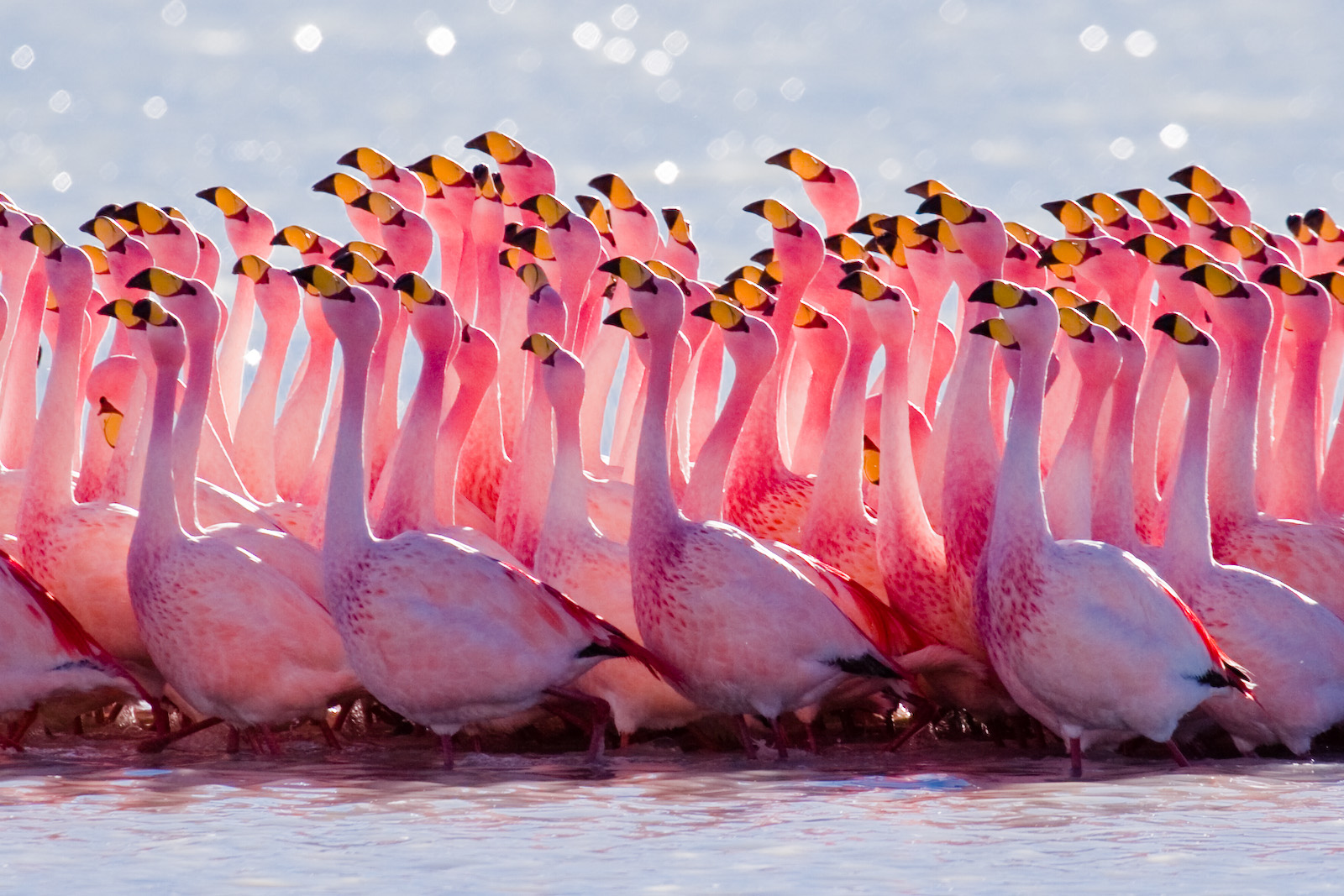
Flamingos: They are experiencing a reduction in their population due to the quality of the tropical and semi-tropical wetlands they depend on for survival.  

The Musk Ox: These creatures face inquired predation by grizzly bears that will be able to expand their range into musk ox habitat due to climate change.  

Climate change does not just affect us as humans, but it impacts all the creatures around us as well.  It is up to us to make a change and make the world a better place for us and these animals.  

Check out these links for more information:


By: Garrett Sanders

Friday, August 7, 2015

Fracking and Climate Change

Hydraulic fracturing, commonly known as ‘fracking’, is a drilling technique used to obtain oil and natural gas from deep in the ground. Patented in 1949 by Halliburton, the practice has expanded and advanced through today, with many companies taking part in this technique. The companies drill deep holes into the earth and cases it with steel and cement, then they pump a mixture of sand, water and chemicals into the well at high pressures, fracturing the rock, allowing natural gasses to flow out of the rock, through the tunnel to the surface where it is treated and removed. Generally, the wells ‘dry up’ within a few years, then they are plugged and the companies move on to other areas. Since 9/11 and conflicts with many countries with high rates of oil production and export, fracking has seen a boom in the U.S., in the last five years alone the U.S. has a daily increase of 3.7 million barrels of oil, dropping the import of oil by 44%. In 2012, the U.S. became the #1 producer of natural gas, removing Russia from the top spot. Obviously, this has been good for the economy of the U.S. but has it been good for our environment?


Environmental Impact:

With fracking, the use of natural gases have become much more abundant than the use of oil and coal. Natural gases output carbon dioxide at less than half the rate of oil and coal, which should be a good thing for the atmosphere. But, what studies are finding is that because the natural gases are more abundant suddenly (because of the prevalence of fracking), and cheaper than coal and oil imported from the Middle East, the rates of consumption have gone up, thus increasing the lowered rates of carbon output. Another problem with fracking is the release of natural gases into the atmosphere while drilling. Methane is the gas that could have the most alarming consequences, being 72 times more potent than carbon dioxide over a 20-year period, trapping heat in the atmosphere. Besides affecting the atmosphere, fracking has had negative effects on our nation’s human water supply, variously from leaks into communities’ ground water supplies and drinking wells to the high volume of water needed to use for the process itself. There have also been a number of earthquakes directly related to fracking practices. Another extremely unfortunate side effect of fracking is that it has taken the focus and funding away from actual clean energy resources that would not be harmful to the environment, such as solar and wind energy. With the funding going mostly towards fracking, solar and wind power research and technology funding has suffered greatly, unable to make strides towards clean energy. How can we shift funding back towards clean energy that is safer for personal health and safer for environmental health to slow down climate change?

Watch this Documentary:


Check out these links: