Pages

Monday, January 30, 2012

That's Gonna Leave a Mark!

 
Even with so much access to the internet, there are still many situations where we encounter printed materials, which need electricity, paper, and ink to be produced.  We all know that printing with recycled paper products can help us preserve precious natural resources, but did you know that many of the inks we use are petroleum-based?

It is estimated that two liters of oil are consumed for every commercial toner cartridge produced, and that U.S. commercial and government agencies use more than 100 million cartridges of toner a year.  In addition, these figures do not take into account the amount of oil need to produce inkjet printer ink for personal printers, or the amount of oil that is needed to make the cartridges that hold the ink.

Thankfully, there are multiple alternatives to using petroleum-based inks.  One such alternative is soy-based inks, which use much less, but still contain small amounts of oil.  The most eco-friendly options are vegetable-based or petroleum-free inks, which do not contain any petroleum. 

By choosing to use environmentally responsible inks over conventional inks and advocating for the same change in both government and private production, we can greatly decrease the amount of oil that we consume.  If we add using recycled paper and recycling old and used ink cartridges to the equation, then we can affect great change with little effort and make significant progress in eliminating the need for petroleum while protecting our natural resources and the environment.


Sources:

Soy Print
http://www.soyprint.net/default.htm

1-800-Recycling.com
http://1800recycling.com/2010/11/soy-ink-petroleum-ink-recycling-greener/

Sunday, January 29, 2012

What's In A Name?


REAL CHICKEN
(via: http://www.organicauthority.com)

You'd likely assume that something called a chicken nugget would consist of chicken, right?  You might want to think again.  Considering the fact that United States boasts the highest yearly fast food consumption, as well as the largest oil consumption of any country, I'd say it's high time that we make some connections here.    

Truth be told, about 50% of a fast food chicken nugget is made up of synthetic ingredients, coming straight from (you guessed it)...a petroleum plant.  You probably didn't think about the fact that it could just as accurately be called a dimethylpolysiloxane nugget that you're dunking into your BBQ sauce (main ingredient: high fructose corn syrup).  Or perhaps not even the fact that your flavor enhanced "chicken" likely travelled hundreds of miles in an ammonia-induced frozen state in the back of a semi truck before reaching your tray.

We've long established that fast food has an extremely negative impact on our waistlines and cholesterol levels, and we're now becoming more aware of it's negative impact on our environment.  So let's quickly address the pros.  Convenience?  Speed?  More bang for your buck?  


It certainly delivers a bang alright, but is it really the kind we're looking for?  Perhaps it's time to reconsider hitting that drive thru for dinner...

There are plenty of healthy, quick options out there (that even kids will approve of!) Here's a few tips for on the go eats:

1. Plan ahead. At the beginning of the week, arm yourself with non-perishable items that can be kept in your purse or car.  A few of my favorites are:
   
     -Dry roasted almonds 
     -Dried fruit such as raisins or cranberries
     -All-natural energy bars
     -Soy crisps (or other baked chips/crackers)
     -Dry oatmeal (just add hot water!)  

Get creative...the possibilities really are endless!

2. Be careful at the coffee shop! Many of those "signature beverages" have ridiculous amounts of added sugar, making your coffee the caloric equivalent of a milkshake! Don't hesitate to ask for an ingredients list, and make changes to your drink as you see fit.

3.  The same rule applies to smoothie shops.  Although they may seem like the healthier option, many of the drink options are sweetened far beyond what is necessary.  Look for ingredients and ask questions! 

And if you simply must hit the drive through for dinner...

4. Modify your meal.  Look for low-cal options (many chains are offering lighter fare menus). Ask for sauces on the side, opt for grilled chicken rather than fried, and easy on the sides, those calories can add up quickly!

5. Don't fall into the salad trap! Many drive-thru salads have worse nutritional stats than the burgers. Hold off on the creamy dressings and additives such as bacon, croutons, and sour cream. And whatever you do, never ever trust a salad that comes served in a deep-fried tortilla!

Hopefully these tips will help guide you through the scary world of eating on the go.  For more tips, check out the sites below.

Happy Eating!


Sources:
Fast Food Nation, by Eric Schlosser
http://nutrition.mcdonalds.com/nutritionexchange/ingredientslist.pdf
http://www.nationmaster.com/red/pie/ene_oil_con-energy-oil-consumption
http://www.organicauthority.com/foodie-buzz/what-is-in-fast-food-chicken-hint-its-not-chicken.html

Friday, January 27, 2012

The Hidden Problem With Oil

          I am writing this post from my house in California. I am writing this post on my laptop. My room is furnished with a desk, a chair and a bed. My house is furnished with couches, TV stands, other chairs and various decorations such as bamboo, flowers, paintings and 2 televisions. I am working under a source of light that is coming from a light bulb that hangs just above my desk. All of these products depended on the use of petroleum in order to get to me. They were all shipped in some fashion using gas powered trucks or planes.  
                My computer was made in part due to petroleum. The electricity that is powering my computer and my light source comes from petroleum. I don’t know exactly which power plant, but it is a safe bet to say that the power source is either gas or coal. Burning coal is an extremely inefficient method of energy. The food I have just eaten for lunch came to me by the use of petroleum. I bought it at a grocery store in which I had to travel to using a gas powered car. Though my car gets about 25 miles per gallon, I still consumed gas to get to the grocery store. All the food at the grocery store arrived via truck. This truck was also powered by gas; without the use of gas powered trucks and cars I would not have anything to eat.
                The clothes on my back were made in part because of petroleum. At the plant where my clothes are made, the light sources are powered by petroleum. The machines that sew the threads together are made with petroleum. The tag on my shirt indicates that it was made in Honduras. How did it get from Honduras to me? Whether it is by boat or by plane or by truck, there is definitely gas and/or petroleum being consumed in order for my shirt to get to me in the United States.
                The problem with petroleum, or oil, is that it is the back bone of our society. What happens when it becomes scarcer than it is now? We deeply depend on foreign oil and as time passes our dependency increases. It is now imperative that we come up with alternative forms of energy. Solar and wind power are great sources of energy. But how do we wane ourselves off of our oil dependence? Petroleum is the basis for nearly every aspect of our society. Most of us heat our houses in the winter using gas. Gas bills continue to rise as it is harder and harder to find enough resources to fill the demand.
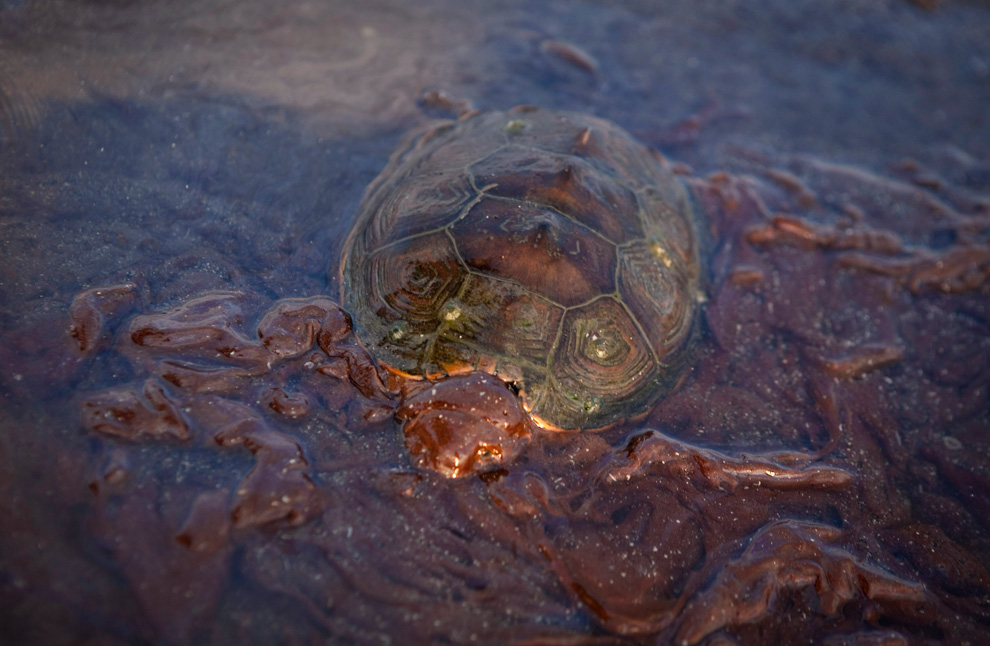
Many of the environmental problems the world faces today can be traced back to fossil fuel dependence (UCS). The effect of fossil fuel dependency can be vividly clear when we look at the BP oil spill that happened a couple years ago off the Gulf Coast. Millions of gallons of oil were spilled into the water. This inhibited fisher men from doing their job. Careers were in jeopardy because of the pollution that occurred. Aside from the impact on humans, many of the natural wild life were in jeopardy due to the water being contaminated with so much oil. I recall seeing pictures of birds that were covered in oil. It was made clear that humans are disrupting the natural order of things by going after oil. Not only the native wildlife was put in jeopardy, but many restaurants and tourist attractions were put in jeopardy because of the oil spill. Countless workers wondered where they would get their pay check because of the pollution that was caused.


                References:
"The Hidden Cost of Fossil Fuels." Union of Concerned Citizens. (2002): 3-1. Web. 27 Jan. 2012. <http://www.ucsusa.org/clean_energy/technology_and_impacts/impacts/the-hidden-cost-of-fossil.html>.

Thursday, January 26, 2012

Guide To Good Eating


Something a lot of us seem to overlook is the kind of journey our meals go on before they reached our stomachs. Did they come on a big truck across the US? Were they flown in or did they come from another country by boat as an import? Even more so than thinking about the journey, even few of us probably give much thought to what kind of resources it takes to ensure that delicious home-cooked dinner your mom makes every Sunday reaches the kitchen table. Thousands of gallons of oil are used every year to transport food products across the country. Oil that could be saved or used elsewhere if we made an effort to eat more local foods.

That's where the Eat Well Guide comes in. This super-easy-to-navigate website is an awesome resource in helping to find better ways to eat. Not only are the foods they have listed healthy, fresh and organic, but this guide also helps to locate delicious options that are grown right near you--so they don't have to travel very far to reach your table. You can search by your zip code to find the stores and restaurants nearest to you, as well as search specifically for products that you might be in need of. Thanks to this guide I recently found an absolutely delightful all-natural pizza parlor less than ten minutes from my house. YUM!

Wednesday, January 25, 2012

Wax 101


If you're anything like me, then you collect candles and burn them in your home, mostly for relaxation-purposes. What you might not realize, however, is that most of these candles are made with paraffin wax, which is derived from crude oil and contains petroleum (a non-renewable resource) by-products. This means that, when burned, they contribute to indoor air contamination, by emitting petro-chemicals that lead to soot deposits.

A better alternative is to look for candles based on beeswax or soy-based waxes. These are better for the air, as the are all-natural, and non-hazardous. And unlike paraffin wax, it is biodegradable. Check out the site below, where you can buy these natural candles, or look for them in your own area.

http://www.mountainroseherbs.com/candle/candlelight.html


Source:
Ecomall: A Place To Help Save The Earth
http://www.ecomall.com/greenshopping/soycandles.htm

How Much Petroleum Cost on Our Health, on Environment and on Economy !


For more information

Petroleum is used in our technology, food and equipment. Simply, we can say that “Petroleum” is considered the secret of our era! Although we appreciate the importance of petroleum and how it simplifies our lives, we know that how using petroleum too much brings a lot of negative impacts to our health, to our economy and to our environment. Thus, lots of researchers devote their time to study the cost of using petroleum in our lives.
It is observed in the majority of countries that consume a lot of petroleum.  For Example, California consumed around $ 160 million last year and this amount raises every year. That will affect negatively the economic status. When we had a look at how petroleum cost our economy and health, we found it in transportation as an example. In crowded cities, more petroleum is consumed in transportation and that cost around $17.3 billion in 2003. However, transportation is one cause of air pollution and that is dangerous sign for health problems and environmental impairment. It is calculated that $ 12.3 billion per year is spent on hospitalizations as a result of air pollution, while 70$ billion is spent a year on health-related prevention procedures from death. 
Environment is also affected from different aspects. Air pollution is the first effect which is considered a result of excess transportation and that leads to global warming which is considered a world problem these days. The second effect is on plants. In other words, air pollution affects the farming, especially the soil. The Oceans is also affected from cruise liners and merchants. All of that leads societies and governments to find practical solutions to reduce the negative effects and cost of petroleum by using alternative fuels and oils. 


Reference:
Shears. J. (2006). Bottom of the Barrel: the Hidden Cost of Petroleum Use in California. Research
Coordinator Center for Energy Efficiency and Renewable Technologies.

Tuesday, January 24, 2012

Petroleum In Everyday Products


Most people only think of a handful of applications for the use of petroleum. However, there are thousands of ways that petroleum is used within products that most people utilize on a regular basis. This is scary because of the harmful effects that long-term exposure to doses of petroleum can have on the human system. Here is the beginning of a long list of products that contain petroleum. Some of the categories include many plastics, cosmetics, medical equipment, clothing, paints, and other materials. Petroleum is one of our main sources of energy, but with the advancements in alternative energy, hopefully that won't be true for long. Avoiding products with hidden petroleum in them can help the environment and help yourself from being exposed to too much of this chemical.