Pages

Showing posts with label #locallove. Show all posts

Friday, December 4, 2020

Productivity During a Pandemic

If you’re like me, COVID-19 has thrown off your entire way of life. Any routine you had before has probably been altered or completely demolished. I have been feeling like month after month there is no point in even trying to get something accomplished. This was particularly hard at the beginning of lock down, but as the year of COVID continues, I find myself getting more and more pessimistic about productivity. In response to my struggle with being a functioning human being, I have decided to help others get through their COVID hump with a field guide to productivity during a pandemic. 


The first thing that has helped me is that routine is essential to feeling productive. Whether you have anything real to accomplish or not, make sure you wake up, shower, and get dressed around the same time everyday! It helps to maintain a sense of purpose. Maybe you spend the rest of your day just reading a book or binging TV, at least you started your day off with purpose! It’ll also help motivate you to keep the day moving forward instead of lounging around in pajamas. 


Along with a routine, I have found that lists are SUPER helpful! Something about checking something off a list makes you feel like you are on top of things! Here’s a tip: add something on your list that you’ve already accomplished. Then you can check it off without doing anything! Lists help to make things feel manageable and digestible. If there’s 5 things on your todo list, then that means you’re just 5 steps away from a fully productive day (even if those steps are just doing the dishes and sweeping your kitchen up!)


The last thing to do is to stay in touch with the people in your life! It can be hard when physical contact isn’t possible, but there are so many ways to keep in touch with friends and family. Maintaining contact and stimulating conversation with loved ones keeps me motivated and feeling connected to the real world. Letting yourself hide in your apartment or home makes it hard to be productive. For me personally, I need to be interacting with other people to get motivated and feel fulfilled, so if you are struggling with productivity, maybe try to reach out to a friend!


Everyone is struggling right now with getting back into a routine and feeling motivated to do anything. I think that we are all in a state of limbo where we are unable to go back to our normal day to day activities, but that doesn’t mean we can’t create a new routine! Start small and go from there. Try these simple steps and see where it takes you!


Wednesday, December 2, 2020

COVID-19 Shutting Us Down


Portland just like everywhere in America is being hit hard with COVID-19 and what it has done to local businesses. It has brought extreme tension and sadness on what is happening to our local economy. Not only are the business owners suffering, but so are the employees that make a living at the shutdown businesses. This latest shutdown by Governor Brown, which started on November 18 is very scary in terms if businesses will be able to get back up on their feet again.

Financial Assistance to Businesses
Governor Kate Brown will be allocating $55 million in assistance to businesses that are being affected by  COVID-19. The money will come from the federal CARES Act fund. This is supposed to be the start of potential more money down the road to help sustain the economy until the virus gets contained. The money will be handled and awarded to the counties based on population. Each county will have to figure out how they want the funds distributed and managing the applications. The hospitality industry and the businesses from black, native American and other disadvantaged communities will be prioritized. 


Oregon Business Groups Urging Kate Brown of shutdown
Oregon’s Coronavirus Recovery Business Coalition urged Kate Brown to consider alternatives in regards to her shutdown of businesses. Sandra McDonough, President and CEO of Oregon Business & Industry said that this shut down will be a lot more damaging than the previous one. This shut down is a little bit more mysterious than the last one right now for workers and business owners because we had the federal unemployment support and small business assistance that was in play. The Business Coalition brought to the table some ideas, but the governor was not buying into that course of action.


Ways to Help Small Businesses
1)Gift Cards- Purchasing gift cards would generate instant cash flow to the suffering businesses. It’s a Win-Win-Win though for all three groups involved though. The business is obviously benefiting because they are bringing in money. The purchaser is benefiting because they are going to be providing a good to the person of their choosing. The receiver of the gift card will obviously be benefiting because they will be able to spend money at that business whenever they want.
 
2)Shopping Local- Instead of shopping at all the chain restaurants or grocery stores do a good service and try to help out the local businesses instead. It is imperative during these times we are going through that we stick together and support each other as much as we possibly can.
 
3) Ordering Online- The easiest way in today’s world is to purchase everything and have it delivered by Amazon. Instead of doing everything the easiest and most convenient way try and order necessary items through local and brick and motor stores and shops. That could make the biggest difference towards them being able to fight through these times.
 
4) Pick-up from Restaurants- if some of your local restaurants don’t do delivery simply see if you can pick it up from them. Even though everything is most convenient through all of the food delivery services try and support your local restaurants when they need it the most.

Helping Others During the Holidays

Image Source: Morgan, Steve.” File:Pioneer Courthouse Square with Christmas tree 2011.jpg.” commons.wikimedia.org, December 23, 2011, https://commons.wikimedia.org/wiki/File:Pioneer_Courthouse_Square_with_Christmas_tree_2011.jpg


As we come closer to the December holidays it is becoming increasingly evident that because of the Covid 19 pandemic many non-profit organizations are changing how they are accepting donations at their holiday events this year. Among the events that are changing the way they do things is Sunshine Division’s Winter Wonderland at Portland International Raceway. Sunshine Division is a non-profit whose mission is to provide food and clothing for those in need in Portland and their yearly fundraising event, Winter Wonderland, helps with that mission. Winter Wonderland is a drive through Christmas light show, but what is changing this year is that tickets are only available for online purchase. Sunshine Division has already had to cancel the majority of their fundraiser events due to the pandemic, so they are hoping for a big turn out at Winter Wonderland to help feed families this year.

The event runs until January 2nd and tickets are sold here: http://winterwonderlandportland.com/

If you are interested in getting involved visit their website: Sunshine Division.org

Similarly to Sunshine Division’s Winter Wonderland the South Portland Toy Drive is being forced to change how they are accepting donations this year. Each year they provide kids with clothes and toys for Christmas, but this year only monetary donations are acceptable due to Covid restrictions.

Here is the information on how to donate this year: South Portland Toy Drive

Another Portland based organization whose priorities are in providing food and shelter for those who might need them is Portland Rescue Mission. In lieu of typical holiday fundraisers, Portland Rescue Mission has established a telethon event in which people may call in to donate.

You can donate by calling 877-544-1319 or online at: Hope for the Holidays Telethon

If you are interested in getting involved visit their website: Portland Rescue Mission.org

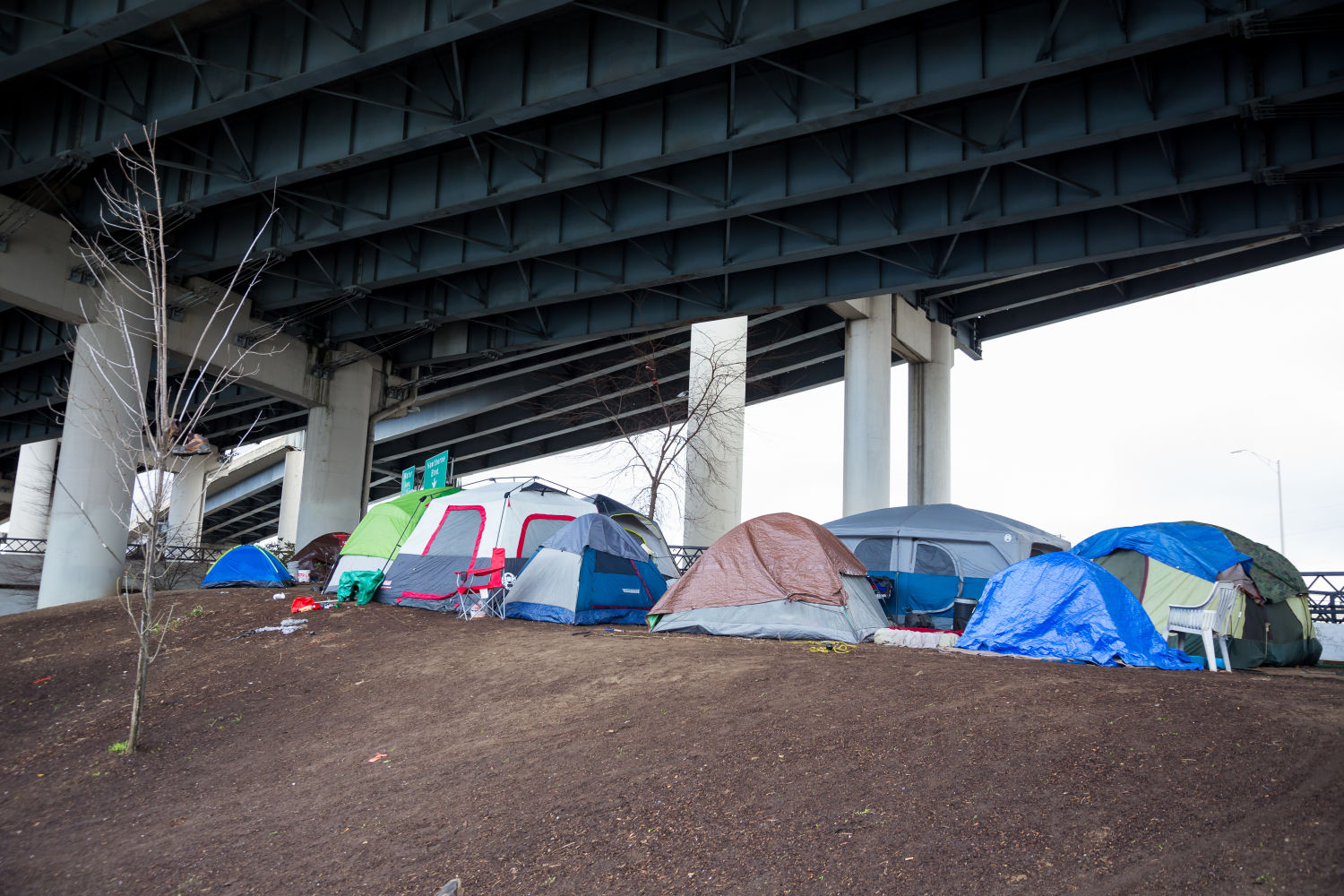
Portland PD’s Response to Homelessness


Image source: Ellis, Rebecca. “Half Of PPB's 2017-18 Arrests Were Of People Experiencing Homelessness.” opb.org, July 17, 2019, https://www.opb.org/news/article/portland-police-homeless-arrests-half-review-2018/.


Overall 2020 has been a year of great societal turmoil, particularly in metropolitan areas such as Portland which have been focal points for social justice advocacy. Since the killing of George Floyd back in May of this year, the public’s attention has shifted once again on the corruption of law enforcement. While the many cases of misconduct in law enforcement involve racial prejudice, many marginalized communities are affected by police behavior as well, such as the homeless.


According to yearly studies by The Oregonian, in the past three years more than fifty percent of arrests in the Portland area were of people living on the streets. This is a troubling statistic in and of itself, but one could truly understand the severity of the issue when considering the fact that less than 5 percent of the population is currently homeless. When taking into account that homeless people are but a fraction of the total population and yet make up the majority of arrests indicate a blatant bias in law enforcement towards homeless people. A bias which is akin to the obvious prejudice seen in law enforcement's treatment of people of color nationwide.


The solution to the homeless crisis does not lie in an endless cycle of jail bookings but rather access to affordable housing. If the Portland Police Department was in partnership with local shelters and organizations that facilitate affordable housing such as Transition Projects, then there may be progress towards diminishing the number of people living on the streets.


If you would like to inform yourself further on the subject:

2019 Portland Police Bureau Review

The Oregonian Report


If you know, or are a person in need of shelter, there are resources here:

Transition Projects

Homelessness during a Pandemic


    With our country in a pandemic, this has lead more people to being homeless and living on the streets. Lawmakers are trying to help secure shelter for the increasing amount of homeless people, especially since Winter is coming and temperatures are dropping: "With Winter fast approaching, Representative Pam Marsh along with Representative Alissa Keny-Guyer want to help get secure shelters for those who need it. “The emergency board of the legislature is meeting, and we'll be considering our $65 million request for it to use, uh, general fund dollars,” Rep. Alissa Keny-Guyer said". https://katu.com/news/local/oregon-lawmakers-look-to-buy-hotels-to-house-homeless-during-coronavirus-pandemic

    Even though the government is trying to help those in need during the colder months, I feel like the holidays allow us to especially help those in need if we can't necessarily help during the rest of the year. Myself personally, I like to try and help out some organization during the holidays that helps those in need, wether that's animals or people. This year I am donating supplies for animals in need in shelters. I think it is important for us to help those, especially the growing homeless population, during this time of year if we can fit it into our budget. 

    One organization that I have volunteered for in the past and I feel is reliable and organized, is the Portland Rescue Mission. They help homeless people all throughout the year and have homeless shelters available throughout the Portland Metro area. They also have recovery programs available; they have Shepherd's Door which helps women, especially with children: "Shepherd’s Door is a community of single women and women with children (ages 10 and under) who participate in New Life Ministries at Portland Rescue Mission. At Shepherd’s Door, you’ll find a sanctuary of peace and security as you move into a healthy lifestyle while dealing with the pain of addiction and previous choices". They also have a recovery program for men called The Harbor: "The Harbor is a community of men overcoming homelessness and addiction in the men’s New Life Ministry of Portland Rescue Mission". I feel like these services and this organization is very helpful to the homeless community in Portland and is a good way to help out during the holidays and during the year. https://www.portlandrescuemission.org/

Saturday, November 28, 2020

Dehumanization of homeless

 Dehumanization of homeless  by Malik walker 


    Homelessness in America is in one of its all time highs, with lost of wages from jobs and people being forced out of there homes due the pandemic of covid 19 the world has been in  a spiral and it has caused a lot of financial hardship for many people 


according to www.whitehouse.gov "Of those, 194,467 (35 percent) were unsheltered, and 358,363 (65 percent) were sheltered. The overall homeless population on a single night represents 0.2 percent of the U.S. population, or 17 people per 10,000 in the population."  this  marker indicates a baseline showing percentages of homelessness before  the covid 19 pandemic began this year  due to the inability to come to a definitive percentage of homelessness since the years study is not over, but   through out  major states there has dramatic increases in the homeless population  for examples according to www.theguardian.com "An estimated 82,955 people became homeless in 2019, a 51% increase from the year before. About 64% became housed again on their own, which means on average, 207 people exit homelessness each day while 227 become homeless." 

 people tend to forget that homeless people are just people that have gotten into a bad situation. there is a fear that a lot of people have of the homeless acting as if they are monsters or are less then human. men and women across the nation suffer from finical hardships  due to extremely high cost of living in  certain states such as California, Oregon and other major cities.  state by www.finacialplanneria.com "The website Gobankingrates.com jumped in and did the math for us in their piece, “How Much Money You Need to Live Comfortably in the 50 Biggest Cities”. They calculated an annual income of $74,371 was about right for the average person to live comfortably in Los Angeles." while the average wages in California are 62,000 a year


Friday, November 27, 2020

Homelessness and COVID-19 in Portland


COVID-19 and the impact of infection spread around the country has been the highlight of this year 2020. To flatten the coronavirus curve, we have been introducing new systems and trying to getting used to the new operations as a member of the community. 


One of the difficulties that Oregon has faced during the pandemic is how to protect homeless people and/or people around them from the coronavirus spread. According to Homelessness Toolkit (portlandoregon.gov), about 2,037 individuals sleep unsheltered in the City of Portland each night. 

The government has implemented The Homelessness and Urban Camping Impact Reduction Program (HUCIRP) under the State of Emergency in Housing and Homelessness to help reduce the impact of homelessness within the community by creating service navigation opportunities for individuals experiencing homelessness while also facilitating the removal of hazardous items and debris from our public spaces. However, as a response to the current condition and the increase of COVID-19 cases, the City of Portland has begun the Homelessness and Urban Camping Impact Reduction Program to protect health and safety. Here are the conditions for determining the sites that will be cleaned up.


Campsites will be prioritized for cleanup
  • 8 or more occupied structures 
  • Block public sidewalks, paths, transit stations, restrooms, or building entrances 
  • Prevent 6 feet of physical distancing 
  • Significant garbage or debris 
  • Evidence of conspicuous drug use: uncapped, used hypodermic needles or other paraphernalia
  • Credible reports of criminal behavior, verified by Portland Police or Multnomah County Sherif

To avoid warning and cleanup, we can do 
  • Limit campsites to fewer than 8 structures. 
  • Keep tents 12 feet apart from people not in your household. 
  • Make sure people can reasonably maintain 6 feet of distance from you and your property. 
  • Leave 10 feet of space from any doorway, transit stop, public restroom, or other high-activity areas. 
  • Keep your camp area free of soiled items, biohazards, and garbage that could transmit disease.


Summary
Homelessness has become one of the biggest problems in Oregon. Especially during the pandemic, the community's responsible operations and appropriate treatments are significant. However, it is also clear that all of us need to cooperate together for reducing COVID-19 cases in the community. When we think about how you can protect not only yourself but also your neighborhoods, there are many things that individuals can practice to protect our community from COVID-19. 

For example,
  • Don’t share cigarettes, phones, utensils, and other commonly shared items. 
  • As much as possible, wash hands for at least 20 seconds with soap and water. For information about accessing a hygiene station, call 503-823-4000. 
  • Use hand sanitizer when possible, rubbing it through fingers – do not wipe it off. 
  • Refrain from touching your nose, mouth, or eyes.
Take a time to reconsider someone else, we are all together now. 


For More Information

Portland government websites and PDF.

Homelessness and Autism


There is no doubt that there are a lot of homeless people who have physical disabilities, thus making it harder for them to find work and live a decent life amongst the populace of not just American society, but societies in other countries. On an equal note, there are also those with disabilities or disorders that are neurological in nature, and cannot be seen by the naked eye. I am of course talking about autism.

Being a person on the autism spectrum myself, I can’t help but sympathize with those who have little to no help during tough economic times, especially now due to COVID-19. Much like those who are physically handicapped, homeless people who have neurological or mental disabilities have extremely limited options open to them in terms of help and support, both from a financial and healthcare standpoint. It’s much worse for those who are unable to make decisions for themselves. For them, being homeless is not only further damaging their mental health, but also their lives as a whole.

As an ever-growing society that spans many different backgrounds, it is important to assist those that need help, especially in the homeless and handicapped communities. There are organizations out there that you can donate to help. In my case, one organization I definitely support is the Autistic Self Advocacy Network, which helps educate those who aren’t familiar with certain high and low-functioning disabilities (i.e. Aspergers’ Syndrome, pervasive developmental disorders [PDD]), how they can be identified, and how they are treated.

For more information on autism and homelessness, see this article from 2016 that also brings it to light and why it matters: https://rootedinrights.org/autism-and-homelessness-the-real-crisis/

Autistic Self Advocacy Network: https://autisticadvocacy.org/

Post by Tom Newton
Senior, PSU

Sunday, November 22, 2020

How to Avoid Existential Dread

Existential dread or an existential crisis, is the moment when we as humans begin to ponder whether our lives have meaning, purpose or value. It's completely natural to have these thoughts and fears and a healthy part of human development. However, when it begins to consume you and influence you negatively, it is best to get a handle on controlling those invasive thoughts. During COVID-19, it is especially common to question our purpose and value and slip into this existential dread. Without being able to socialize normally, we are left with few distractions and even more time to sit and stir about the meaning of the universe and our significance within it. Although these thoughts may feel like they pillage your mind and take no prisoners, there are some ways to combat this thief of joy. 


Step 1: Even in the darkest of times, remember your personal values. When it feels like the world could end at any moment, (or maybe it's ending as you're reading this- who knows?) it can be hard to remember the simple things that you personally care about. Our personal values make us who we are and keep us grounded in times of stress and confusion. Next time you can feel the existential darkness creep in, grab a pen and paper and jot down a few things that you hold dear no matter what. For some this is family, for others it could be the joy you get from beating your cousin at Super Mario Bros., anything goes! Take note of the things on Earth and within reach that define who you are regardless of what is happening in the world. This is both an exercise to remind you that you are a real life human with values and important thoughts, and to also ground you and lower any rising anxiety. 

If the values list isn't making you feel any better, let's move on to Step 2: Practice mindfulness! Mindfulness is the act of focusing your attention on the present moment and accepting all sensations within this moment. In essence, it means to focus and appreciate the now. This can feel nearly unachievable when the feeling of the universe is crashing down around you, but mindfulness can always be practiced regardless of the situation. Take time to breath in and out and focus on the way the oxygen feels. Take note of where you are in a room and notice how it feels to be standing or sitting. If you are eating, focus on every flavor or smell. One of my personal favorite ways to practice mindfulness is through music. Really focus on the way music sounds and try to identify things you have never noticed before in a song. These are simple ways to bring yourself back to Earth and distract from the overwhelming doom that has planted itself in your mind. 

If Step 1 and 2 prove ineffective, it is now time to give Step 3 a try: Reach out to a friend or family member. Existential crises are often brought on by a feeling of disconnection from the world and others, so contacting someone you are comfortable with is a great way to bring yourself back to reality. During a pandemic in which quarantining and social distancing is essential, feeling disconnected from others is bound to happen. Maintaining relationships with other humans is an important part of staying sane when existential dread comes knocking on your door. There is even a high chance that someone you are close to is or has experienced the same thing! 


At the end of the day, it is important to understand that this feeling of existential dread is something that is natural and an important element of human development. It is especially normal to feel this during uncertain times or times of universal elevated stress (*cough cough* GLOBAL PANDEMIC). With that said, if they are consuming you to a point where you feel like you can't function healthily, please reach out to a helpline and seek expert help (resources below.) We are all experiencing a crazy, unpredictable world together and even though existential dread is unavoidable, we can't let it take control of the life we have. 


RESOURCES:

SAMHSA Help Line: 

1-800-662-HELP (4357)


Supporting Local Businesses on a Budget

As Oregon embarks on its second lock down order, small businesses are feeling this freeze both in spirit and in finances. Businesses have cut down their hours, services and for some, they have completely shut down. This is devastating for our community as a whole. Small businesses keep communities diverse and vibrant, not to mention the jobs that they provide. In an ideal world we could all donate and purchase from these small shops, but unfortunately due to COVID most of us are also suffering financially from this pandemic. So, how can we help our favorite local small businesses during COVID-19, while also watching out for our own finances? It turns out there are actually a few ways to do this!


The first way is by following them on social media and interacting with their posts. It's likely that many of them rely on social media to grow their businesses. Instagram and Facebook are huge tools for marketing, especially for small businesses that may not have a full marketing team. Interacting with their posts right now is one of the easiest ways to boost their account and spread the word about them! It just takes a couple clicks and you’ve helped a small business without even touching your wallet!


Another great way to help local businesses is by leaving positive reviews on Yelp or Facebook. These reviews help to boost their businesses website and encourage potential customers to check them out. You do not have to purchase from a small business to help boost their sales! Encouraging other people to try their product or service is a way to show that you care about their success and send more customers in their direction!  


One more way to help your local business get through this particularly tough time is by reaching out to them directly with a little word of encouragement. On top of the financial problems this is causing for so many small business owners, there is also a loss of morale that so many are experiencing. Sending an email or comment about how much you appreciate and love a small business is the emotional support they may need to get them through these uncertain times. Seeing sales go down can make business owners feel like they are not as wanted or appreciated, but this is not the case! If you are able to, send a nice email or a happy comment on their next instagram post. It might make their whole week!


Everyone is struggling right now in a lot of ways. We would all love to order take out every night and go on online shopping sprees, but that is not exactly feasible for many of us right now. Maybe we are not able to support our local businesses through our wallets, ,but we can support them through our words and hearts. 


For more resources and ideas check out these articles!


NBC News: 11 Ways to Help Small Businesses Affected by Coronavirus


Harvard Business School: Ways to Help Small Businesses Now


Wednesday, November 18, 2020

Homelessness doesn't equal substance abuse


One correlation often associated with the homeless population is drugs or alcohol, some sort of substance abuse.  Growing up without understanding them, the stereotype I was shown was that they were bad people and you would steer away from them.  Often in the media they’ll be depicted as dangerous, on the side doing drugs or heavily drunk among parks, etc.  What needs to be understood is that most of the homeless individuals struggling with substance abuse have some form of a pre-existing mental health condition and were led to drugs or alcohol as a result before their homelessness.  This would then lead to their relationships and responsibilities being broken down and those they can rely on leaving them or disregarding them. Homelessness becomes a result of these issues, and due to lack of support they are unable to find or receive proper treatment.


In terms of data,  it is estimated that over half of the people living in supportive housing systems suffer from substance abuse disorder.  It is found that the elderly will turn to alcohol and the youth towards drugs.  These housing solutions aren’t a final means to solving the homeless crisis as these individuals living through the housing systems also require proper address of their issues to get them back on their feet and to a position where they can place themselves back in society.  Luckily there are solutions towards that in the form of recovery centers.  These centers will help assess and work on improving their problems with substance abuse or their mental health while providing resources for them to utilize and absorb for their reintegration.  The issue of course that comes with being homeless is the means to pay for it or access it.  In regards to payment, the options include scholarships, public insurance, or free and low income programs of which can be researched for the desirable area.  The links below provide additional information and resources for help.

Resources

Addiction Resource

AddictionCenter

Recovery


Friday, November 13, 2020

Living in the Pandemic


    Living situations are always complicated when deciding where to live or who to live with, but unfortunately, during the COVID-19 pandemic, several thousands of people have lost jobs or have been evicted from their homes, resulting in more people being homeless across the world. Some people have had to resort to moving in with family, which I've done myself during this pandemic. As a college student, I'll try to find ways to save financially in any way I can. Before the pandemic, I decided to go to PSU, because I had the advantage on not living in the dorms, and ended up living with family. I knew how expensive college already is, so when the pandemic hit and I knew I wouldn't be attending classes in person, I decided to move back with my parents. It's not just college students who have done this, but everyone who want to live comfortably. But how does someone live comfortably during the a global pandemic, especially if they don't have a place to live?

    The homeless population is already a global issue that we have been attempting to address altogether, but people are making more precautions with COVID making it's ways into communities. According to the CDC and the National Alliance to End Homelessness, discusses how people who are homeless age faster than those who are, making them a greater risk, because as the CDC has reported, older people are at a greater risk of getting COVID. So, if the homeless population is aging faster and has less access to health care, they also have a greater risk. The unfortunate issue is that much of the homeless population are faced to face homelessness, because of unaffordable housing, so as I mentioned before many people will try to live with friends or family if possible. However, we know many people don't have that access.

    Having low income housing is such an important part to combating homelessness, because as more people move out on their own, affordable housing is what will allow more people to have a decent life and combat the homelessness issue that America, as well as the world, is facing. Argyle Gardens is one group that is attempting to combat the issue. They are working on creating more affordable housing for people of low income, and is considered a "sustainable apartment community." They are a group that has shown us that affordable housing is possible and we have a way to combat the homeless population issue.

For More Information, Click Here:

https://www.argylegardensapts.com

https://www.oregonmetro.gov/news/argyle-gardens-affordable-housing-community-opens-north-portland

Tuesday, November 10, 2020

Homelessness in Families

The Numbers Behind Oregon's Homelessness Crisis | Portland Monthly

    Did you know that Oregon had the highest rate of unsheltered homeless families in the country in 2019? Oregon had a rate of 54%. The closest states to Oregon in this were Colorado and Tennessee at 30%. That is a 24% difference in rates, almost double the rates of Colorado and Tennessee. When I read this statistic, I found it very upsetting. 

    I feel like when the homeless population is brought up in media, they only focus on homeless individuals and not the families that are experiencing homelessness. I had figured that there were some homeless families as well but I didn't know it was to this extent. This is why I think that having low-income housing and available shelters are so important in our communities because we need to help those in need and especially help those who are struggling to provide for their families and young children. If we want to stop homelessness, we need to start focusing on the younger generations that are experiencing homeless so that they don't grow up homeless and have children who are then homeless and the trend continues for more generations to come.

    One company that is trying to combat homelessness in Oregon (Portland specifically) is Portland Homeless Family Solutions. They provide housing for homeless people in Portland and you can help the fight by donating or volunteering with the company. Find out more at http://www.pdxhfs.org/.

Sunday, November 8, 2020

TOUCH STARVATION AND DEPRIVATION DUE TO COVID-19


Touch Starvation is a Consequence of COVID-19's Physical Distancing

The current COVID-19 pandemic times mean that social distancing is an important practice to protect your health, but social distancing can also lead to feelings of isolation and may cause individuals to become touch starved or touch-deprived. Humans are designed to be social people and we have many different forms of daily physical contact. When we take away these daily and routine physical contact connections we can often fall into the emotional state known as touch starvation. Touch starvation is the lack of sufficient skin to skin or human touch interactions. Pre-COVID times, we had many different forms of skin to skin or human interaction contact, handshakes, a comforting or guiding hand on your shoulder, hugs, and other forms of daily casual contact. Read more about COVID-19s role in touch deprivation by clicking the link "Touch starvation is a consequence of COVID-19's physical distancing"


7 Signs You Might Be Suffering From Touch Deprivation
Being touch starved or deprived of touch can lead to several emotional and behavioral side effects such as stress, body image issues, and even aggressive behavior. Click the link to read about seven signs of touch deprivation "7 Signs of touch deprivation "


5 Soothing Practices to Help You Cope With Touch Deprivation
Even though there are no exact substitutes for human contact and connection, there are still habits and practices we can do to help soothe our brain and emotions during these times. We can stimulate and support our brain and mental health by listening to ASMR videos. We can support our bodies by comforting practices such as warm baths and weighted blankets. Click the link to read more practice for dealing with touch deprivation "5 Soothing practices to help you cope with touch deprivation"


Click and read the links below to learn more about touch starvation and deprivation

Saturday, October 24, 2020

Mental Health Assistance During These Times of Uncertainty

 It is no surprise that this year has been harsh on everyone, causing uncertainty and stresses at far more extremes than one would expect during a normal year. One thing that has changed is the focus on mental health and helping people get through the effects of stress and other mental illness related symptoms. These kinds of symptoms can have varying negative effects on people’s ability to function, one of the more extreme results being homelessness. Being unable to function and losing jobs due to inactivity, lack of motivation, exhaustion, depression, and many other things make keeping not only oneself in functioning order difficult, but a job even harder.


What can I do to help myself when it comes to my mental health, the symptoms from mental illnesses and the stressors I face daily?
With this there can be many things a person can do to lessen the effects of the impacts their mental health has on them on a daily basis. For one, something that a lot of people can do is to visit their general healthcare doctor. They have general knowledge on mental health effects and have access to resources that mainly focus on this area. Psychologytoday is also a good place to look for therapists if a person does not have access to a general health doctor. There are also many resources online that can help reduce stress as well, this is an example of that. It provides sessions to help one through their stress through breathing.

If you are experiencing the effects of mental illnesses, you aren’t alone, tons of people are experiencing the same kinds of fight you deal with every day, it is never too late to start working towards getting better

If you or someone you know has been feeling suicidal, please go here and call the listed number to get help: suicidepreventionlifeline

Friday, October 16, 2020

FINANCIAL PLANNING TO PREVENT HOMELESSNESS IN TIMES OF UNCERTAINTY


2020 has been a year of uncertainty for all of us. Some of us are dealing with personal losses, career setbacks, financial and housing struggles, and all of us are looking with uncertainty at the global economy, housing market, and job economy. It can be hard to feel safe and secure when there are so many uncontrollable factors affecting our lives. Homelessness often occurs due to unforeseen or uncontrollable financial burdens, which is why it is important to take a hard look at our financial security and assess where we are at, and where we may be vulnerable to hardships and loss.

Financial security is more than simply having money in the bank or a roof over our heads.  Financial security includes our assets, sources of income, our debt to income ratio, our living expenses, our job security, and more. Our Financial security is affected by questions like: What would happen if you got sick and could not work?  What is your biggest financial expense and what would happen if this burden grew? If you could not pay all of your expenses, which ones would you pay first? We have to look at all these factors to calculate our financial security, and it's only after taking a hard look at our finances that we can plan and prepare for the unknown and work to prevent financial crisis and homelessness. 

Some questions we should be asking ourselves when assessing our 2020 financial security

  • How would you and your family be affected if you or a family member tested positive for COVID-19?
  • What would your household income look like if you or a partner lost your job due to employer cutbacks?
  • If you had no income coming in, how long would you be able to pay your expenses?
  • If you had a sudden or large emergency expense, would you be able to pay it?
  • What is the current cost of your housing and living expenses and how can you manage and lower these costs if need be?
  • What is the bare minimum income you need to maintain your housing or to find a more affordable housing option?

"Change what you can control, manage what you don't, and know the difference"-Peter Drucker

All these aspects of calculating financial security allow us to plan for the uncertain times, and unexpected financial burdens, that often lead to homelessness.  By knowing our current finances, and planning ahead, we can seek to avoid financial struggles and prevent homelessness. Everyone at every level of income and financial standing benefits from assessing their financial security and planning for the future. Creating a plan for your financial success and stability should not feel unreachable or unavailable to anyone. These links provide information and resources for calculating your financial security and planning ahead for financial struggles.


How to measure your financial security


Baby steps to beginning financial success​


Resources for low-income financial counseling 


Thursday, August 6, 2020

Organizations, Support Groups, and Business for Racial Equality in Portland, OR.

    While most of us are either working at home or working hard in the outside world to survive the economic droop, we're are still very much living during a time where people are suffering at the hands of injustice. The best solution for community sustenance consists of a select variety of actions. Below is a list of groups and business that you can support in order to make change in the city of Portland, as well as some resources that can be used to educate yourself on various issues regarding recent events, and the history of systematic discrimination in the city.